
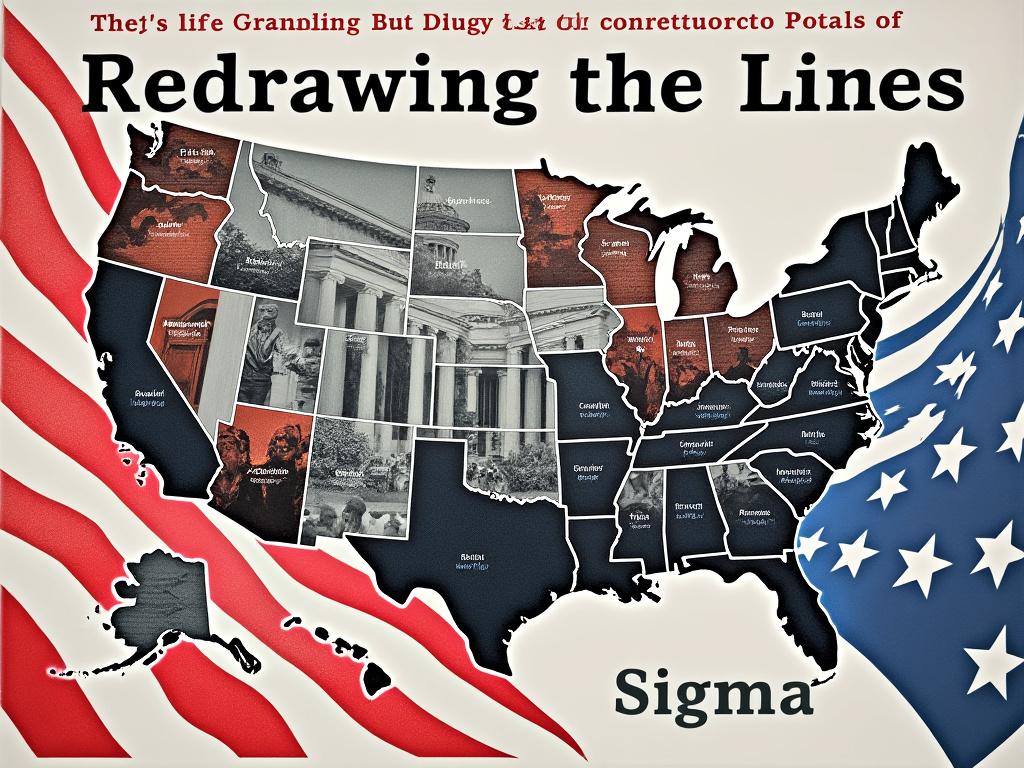
The battle over redistricting has fiercely escalated in 2025, transforming from state-level disputes into a critical national issue. This growing conflict threatens to dramatically influence the 2026 midterm elections and redefine electoral boundaries across the United States.
The Genesis of the 2025 Redistricting Conflict
The 2025 redistricting debate ignited when Texas Republicans unveiled a congressional map poised to significantly favor their electoral prospects. This strategic move, construed by some as an aggressive play to consolidate power, triggered a domino effect nationwide, as other states began crafting similar contentious plans. Initial reactions were swift and pronounced, with figures from multiple political spectrums voicing concern or support. Former President Trump’s endorsement of the Texas map heightened its visibility and further stoked national debate, underscoring the increasing politicization of redistricting. This episode not only laid bare the tactics employed but also set the stage for a broader, more intense showdown on the redistricting front across the country, reshaping dialogues about fair representation and electoral integrity ahead of the crucial 2026 midterm elections.
Responding Across Party Lines
In response to the Republican redistricting efforts exemplified by Texas, Democratic states have not remained passive. Led by California, New York, and Illinois, these states under Democratic governance are forging a strategy that emphasizes preemptive and aggressive redistricting measures. Governor Gavin Newsom of California, proposing a special legislative session to craft and potentially pass new district maps through a special election, symbolizes this shift. This bold move is aimed not only at countering the gerrymandering trends but also at setting a precedent for proactive constitutional measures within Democratic strongholds.
The coordination among these states reveals a strategic alignment designed to enhance Democratic representation federally. By adopting aggressive redistricting, there is an implied challenge to the traditionally reactive nature of partisan mapping. This comes with significant implications, including increasing the political stakes ahead of the 2026 midterm elections where these new maps could fundamentally alter the electoral panoramas in these states. These efforts are framed not merely as a counteraction but as a redefinition of how Democratic states engage in the redistricting skirmish, potentially influencing broader national strategies in electoral politics.
The Legal and Ethical Quandaries
The redistricting battles in the U.S. have evolved into intricate legal and ethical dilemmas steeped in questions of constitutionality and fairness. Central to these confrontations are the challenges against gerrymandering practices brought before courts across the nation. Historically, the judiciary has grappled with the principles underpinning redistricting—young precedents suggest varied interpretations regarding the limits of partisan gerrymandering. Amid this legal mosaic, independent commissions have emerged as preferred alternatives to partisan legislatures. Experts argue that these bodies help mitigate overt political bias, offering a semblance of neutrality essential in upholding democratic ideals. However, even these commissions face scrutiny regarding their composition and influence, reflecting a broad skepticism about achieving genuine nonpartisanship. The discourse around these issues reveals a fundamental concern: the potential erosion of fair representation, challenging the core of democratic governance and making each court decision a critical benchmark in defining the boundaries of electoral fairness.
Strategic Moves in Other States
In states like Missouri, Ohio, Michigan, and North Carolina, the redistricting battles are shaping up as strategic chess games between Republican and Democratic leaders. In Missouri, the Republican dominance in the state legislature has pushed for maps that consolidate their rural strongholds, cleverly circumventing the denser, Democratic-leaning urban areas. Conversely, in Michigan where a bipartisan redistricting commission is in place, we observe a tense negotiation process, aimed at achieving fairer representation by curbing overt partisan gerrymandering. Ohio presents another intense battleground where recent court rulings have necessitated redraws that comply with anti-gerrymandering reforms previously approved by voters. North Carolina, notorious for its redistricting litigations, reflects a scenario of aggressive map drawing influenced by shifting judicial interpretations, leading to fluctuating political fortunes. These maneuvers highlight the critical role of state courts in these decisions, emphasizing the unpredictable legislative battles catalyzed by ever-changing partisan strategies. Such patterns across these states not only echo the complexities mentioned in previous chapters about legal and ethical quandaries but also set a significant precedent for potential political realignments discussed in subsequent chapters.
Future Implications and Political Landscapes
The 2025 redistricting battles, sweeping across the United States, have seeded profound implications for the 2026 midterm elections and the broader political landscape. As jurisdictions grapple with drawing districts, a polarizing atmosphere ensues, potentially altering the balance of congressional powers. Public trust is teetering on the brink, with many perceiving these maneuvers as strategic ploys rather than fair representation efforts. This eroding confidence could significantly affect voter turnout and engagement, further polarizing American politics. Additionally, this widespread contention could catalyze a push towards federal regulations or a set of national standards, aimed at harmonizing and depoliticizing the redistricting process, thus preserving the integrity of representative democracy in America. As these debates intensify, the very fabric of electoral fairness and democratic governance could be redrawn along with the maps.
Conclusions
The intensification of redistricting battles across the U.S. signifies a pivotal moment in American politics, with major implications for the 2026 elections and democratic representation. As parties entrench further into partisan strategies, the challenge remains to uphold the ethos of fair electoral processes amidst rising polarization.