
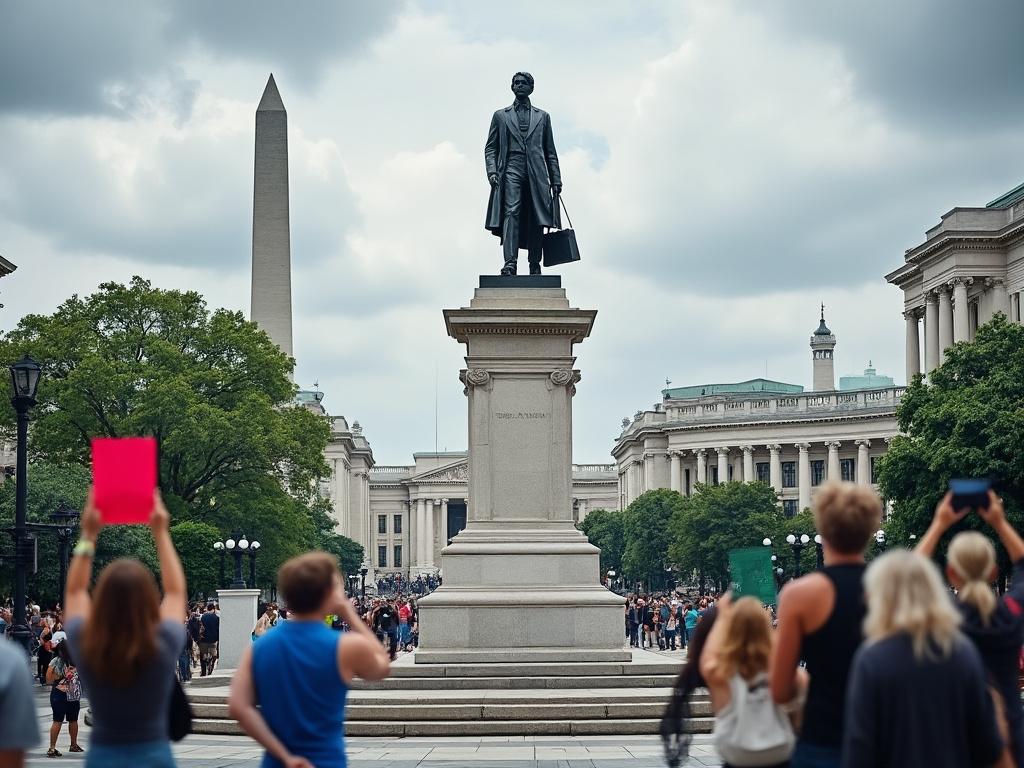
In October 2025, Washington, D.C. will witness the controversial reinstallation of the Albert Pike statue, a Confederate symbol removed during the 2020 racial justice protests. This event reignites critical discussions on national memory, representation, and the evolving landscape of American monuments.
History of the Albert Pike Statue
Erected in 1901 in Judiciary Square, the Albert Pike statue uniquely stood as the sole outdoor monument in Washington, D.C., dedicated to a Confederate military figure. Pike, known for his role as a Confederate brigadier general, was equally prominent as a leader within the Freemasonry community. This dual identity spurred complex perceptions and controversies regarding his public commemoration. Given its singular status and the subject’s Masonic influence, the statue symbolically underscored themes of reconciliation and remembrance but also evoked significant discord concerning the valorization of Confederate history in the nation’s capital. As societal attitudes evolved, debates intensified around the appropriateness of memorializing figures linked to the Confederacy, framing the Pike statue as a focal point for discussions about memory, identity, and historical legacy in public spaces.
2020 Protests and Toppling
On June 19, 2020, amid nationwide protests triggered by the murder of George Floyd, the statue of Albert Pike in Judiciary Square became a focal point of contention. Protesters, marking Juneteenth—a symbol of emancipation—chose this statue for its Confederate ties. The demonstration escalated when the statue was toppled and subsequently set ablaze, signaling a powerful rejection of its Confederate symbolism. Immediate reactions varied widely. President Donald Trump condemned the act on Twitter, demanding arrests and lamenting a lack of law enforcement response. Conversely, many activists and members of the public supported the statue’s removal as a step towards addressing systemic racial injustices. News outlets nationwide headlined the incident, sparking a vigorous debate about the presence of Confederate monuments in public spaces and their impact on community values and memory.
Debate Over Confederate Monuments
The debate surrounding the fate of Confederate statues like the one of Albert Pike magnifies a tangle of legal and ethical considerations. Property law intertwines with municipal authority, posing dilemmas around ownership rights and local governments’ powers to alter or remove public monuments. Meanwhile, community desires reflect a broad spectrum of opinions, complicating consensus on such issues. Legal scholars and historians have advocated for relocating statues to museums or historical sites where comprehensive narratives can be presented. This approach, they argue, sidesteps the glorification of controversial figures, instead placing them within the appropriate historical context that denounces their ideologies while preserving the educational value. These discussions underscore the nuanced challenges faced when reconciling national heritage with evolving societal values.
Federal Decisions and Executive Orders
The reinstatement of the Albert Pike statue has been driven by federal influence, notably an executive order aimed at protecting monuments of “historically significant Americans.” This directive, which emerged amid national protests against Confederate symbols, called for the defense of historical integrity against what was termed as ‘mob rule.’ Despite this strong federal stance, the local sentiment in D.C. has largely been oppositional, reflecting broader public opinion that sees such statues as celebrating a contentious, and for many, painful chapter of American history. This tension highlights a significant discord between federally mandated preservation policies and the evolving views on racial justice within local communities across the nation. This clash not only stirs legal debates but also questions about whom historical preservation ultimately serves and the narrative it upholds.
Broader Implications
The reinstallation of the Albert Pike statue in Washington, D.C. reverberates beyond its immediate locale, highlighting a fracture in United States governance: the tussle between federal authority and the autonomy of D.C.’s local government. This specific instance manifests broader national debates over historical accountability and racial justice. By reinstating a Confederate figure, conflicting messages are sent about the nation’s stance on its contentious past, raising critical questions about the role of monuments in collective memory. As the nation grapples with these issues, the Pike statue becomes a symbol not just of historical figures, but of the ongoing struggle to reconcile America’s diverse and often painful history with contemporary values of inclusivity and equality.
Conclusions
The reinstallation of the Albert Pike statue exemplifies the persistent tension between preserving history and promoting a respectful and inclusive public space. As the nation grapples with this resurgence of past conflicts, it must navigate legal, ethical, and community-driven mandates to forge a tranquil consensus on public memorials.