
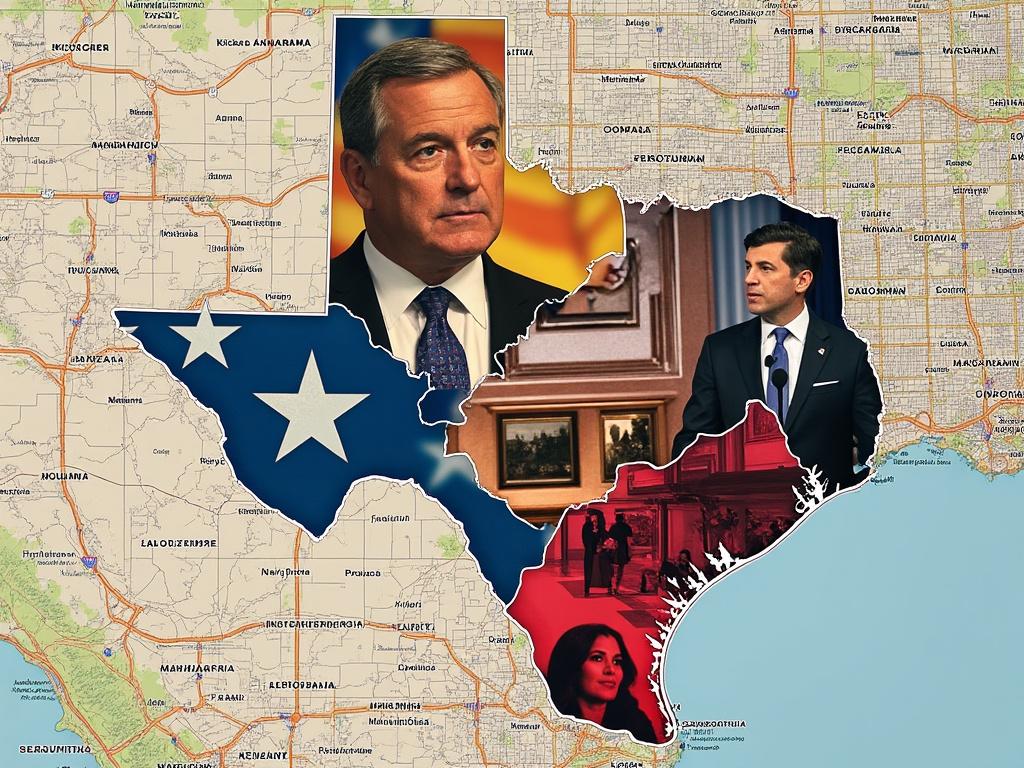
The debate over redistricting in Texas has captured nationwide attention as it enters a pivotal phase with Republicans aiming to redraw congressional districts. This move could potentially reshape the balance of power in the U.S. House, sparking a blend of legal contests, political strategies, and significant public interest.
The Current Landscape
As the political tug-of-war intensifies, the crux of the confrontation looms on the horizon: the imminent legal battles and public campaigns poised to unfold. Anticipating the Republican-initiated redrawing, Texas Democrats are rallying resources, aligning with civil advocacy groups and preparing extensive lawsuits grounded in accusations of gerrymandering and voter disenfranchisement. Key arguments cite the Voting Rights Act, emphasizing the dilution of minority votes in burgeoning urban centers—places where demographic shifts could alter the political landscape favorably towards Democrats if districts were drawn more equitably. The impending court challenges are not only expected to stall immediate changes but could also set new legal precedents, influencing redistricting discourse nationwide. Public perception campaigns are simultaneously being strategized to illuminate the impacts of redistricting on fair representation, aiming to sway public opinion and gather national support for reform.
Democratic Resistance
In response to Republican efforts to manipulate Congressional boundaries, Texas Democrats have exerted their limited power through a bold strategic quorum break, effectively paralyzing the legislature temporarily. This tactic has escalated the battle over redistricting to a national spotlight, garnering support from Democratic leadership across the United States. The intentional absence of Democrats from legislative sessions highlights a profound resistance to what they view as an undermining of fair representation, particularly for minority communities. This showdown not only casts light on significant procedural stalemates but also intensifies the necessity of upcoming legal scrutiny. The involvement of national entities underscores the perceived threat to democratic processes and amplifies the consequential nature of the redistricting outcomes. As the focus shifts towards judicial and legislative examinations, the ramifications of these actions loom large over both the state’s and the nation’s political landscape.
Legal and Procedural Pathways
In the ongoing Texas redistricting battle, the legal and procedural pathways involve multifaceted interactions between state bodies such as the Legislature and the Legislative Redistricting Board. Once a redistricting plan is approved, parties affected may challenge it, often leading to lengthy litigation in state or federal courts, scrutinizing the maps under the Voting Rights Act and constitutional fairness standards. Recently, major legal challenges have erupted, most notably from the Department of Justice, accusing Texas of racial gerrymandering. These accusations pivot around the dilution of minority voting power, reminiscent of past historical struggles in the state. If courts rule against the state maps, potential outcomes include judicially-imposed plans or orders for new maps to be drawn that comply with equitable standards, thus shaping Texas’ political future and possibly altering the balance in Congressional representation, which is crucial in the broader political context of the U.S.
Broader Implications
In the intricate saga of Texas redistricting, the broader implications are profoundly significant. The redrawing of congressional districts not only delineates political power within the state but has pronounced national repercussions. Should Texas, a pivotal state, shift even marginally towards one political party, the balance in the U.S. House could tilt, influencing legislative agendas on a national scale. High-profile political figures and national organizations are hence deeply invested, recognizing that Texas’ electoral map can shape federal policy directions. Thus, the outcomes of this redistricting cycle are crucial, as they extend beyond state lines, potentially steering the political climate and policy priorities across America.
What to Watch For Next
As we pivot from the broader implications of Texas redistricting, it is crucial to monitor forthcoming judicial decisions that may influence the configuration of district maps, potentially altering local and national political tides. Upcoming court rulings will determine the legality of current district lines, with particular scrutiny on violations of the Voting Rights Act which could lead to redrawing maps. Similarly, political maneuvers within the Texas Legislature could see shifts in power as lawmakers possibly introduce new legislation to address or exploit redistricting outcomes. These actions will not only reshape the state’s congressional delegation but could also set significant precedents for redistricting processes across the nation, profoundly impacting how political boundaries are drawn in future cycles. Observing these developments offers a lens into the evolving tactical battleground of U.S. electoral politics.
Conclusions
Texas’ ongoing redistricting has revealed deep political divides and strategic maneuvering, highlighting the profound implications such efforts have on democratic processes and minority representation. As both sides entrench for a prolonged fight, the outcomes of this contentious battle could very well dictate the political future not just of Texas, but of the entire nation.