
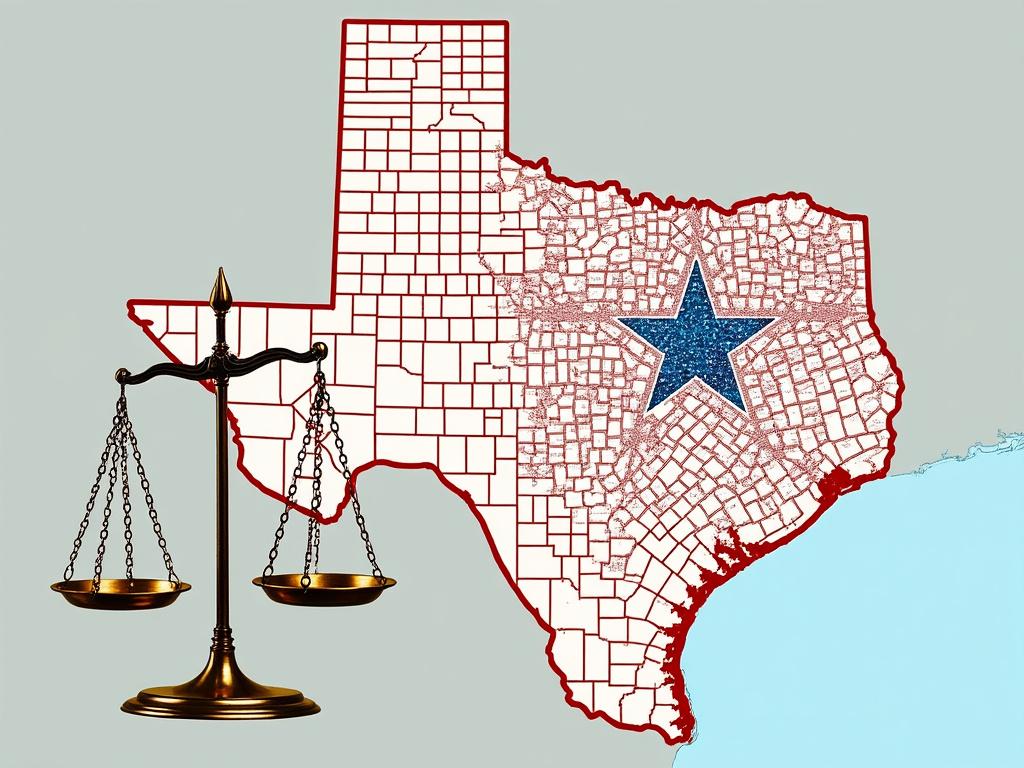
The recent advancement of a new congressional map by the Texas House Redistricting Committee, specifically designed to favor Republican candidates, has ignited a fierce partisan debate. With threats of litigation and accusations of voter suppression, this move could significantly alter the political landscape ahead of the 2026 midterm elections.
Background and Political Motivation
The recent drive for redistricting in Texas can be traced to strategic maneuvers primarily orchestrated by GOP operatives aiming to solidify their grip on power amidst demographic shifts that could influence electoral outcomes. Influential figures within the Republican party, including former President Donald Trump, have actively participated in or endorsed these redistricting efforts. Their involvement highlights a clear political motivation: to maintain a Republican stronghold in the U.S. House by redefining district boundaries in a way that favors the GOP, especially given their precarious, slim majority. This tactical readjustment is indicative of a broader national strategy to ensure long-term Republican dominance in key legislative arenas, including the battleground state of Texas, where the demographic tide is increasingly leaning towards a more diverse, and potentially liberal, electorate.
Key Features of the Proposed Map
The proposed congressional map in Texas introduces pivotal changes primarily in the Houston, Austin, and Dallas areas. In Houston, the map seemingly disperses the dense, predominantly Democratic urban voters among more expansive, rural, Republican-leaning districts. Austin, which has historically voted liberally, would see its influence diluted under a similar strategy, sprawling into conservative segments of surrounding counties. Likewise, Dallas’s suburban areas are reconfigured to enhance Republican probabilities by incorporating rural regions. These alterations are poised to transform several competitive or leaning-Democratic constituencies into apparent Republican strongholds, thereby potentially curbing electoral competition. This strategy could solidify GOP control and impact future policy directions significantly.
Controversy and Public Response
The advancement of the GOP-friendly map sparked substantial backlash, particularly from Democrats, civil rights groups, and many Texas citizens, who argued it could suppress minority voters’ influence. Critics contend that the redrawn districts would dilute the voting power of rapidly growing Hispanic and Black populations, areas traditionally less favorable to Republican candidates. This issue of gerrymandering resonates with broader national concerns over equity and representation, reflecting deep-seated worries that such strategies may undermine democratic ideals by entrenching party dominance at the expense of fair voter representation. These criticisms align with fears that the procedural dynamics, covered in the subsequent chapter, lack both transparency and legitimate constitutional grounding, posing significant legal challenges.
Procedural Dynamics and Legal Context
The procedural dynamics of redistricting in Texas, particularly concerning the advancements of the GOP-friendly map, tread a fine line within legal frameworks. The Texas House committee’s process has been questioned for its transparency and hearings’ legitimacy. Critics argue that these sessions lacked substantial public input, raising concerns about the democratic robustness of these proceedings. Furthermore, the constitutionality of both existing and proposed district lines faces intense scrutiny. Legal experts anticipate challenges based on potential violations of the Voting Rights Act, specifically concerning the dilution of minority voting power. Should this map be ratified, it could trigger a series of legal battles, potentially escalating to the Supreme Court, which could set significant national precedents affecting future redistricting efforts.
Broader Implications
The strategic redistricting in Texas could significantly strengthen the GOP’s electoral positions, potentially altering the national political landscape and influencing Congressional control. The redrawing of districts—viewed by some as gerrymandering—may not only skew immediate electoral outcomes but also establish a precedent prompting similar tactics nationwide. If other states follow Texas’ example, this could lead to a widespread reshaping of political boundaries, further polarizing American politics and intensifying regional ideological divides. This might engender a cycle where power consolidation begets further consolidation, thereby impacting democratic representativeness across the U.S. Such changes carry the risk of eroding public trust in the electoral process, especially if viewed as undermining electoral fairness.
Conclusions
The Texas GOP’s aggressive redistricting plan, backed by potent political forces, sets the stage for significant shifts in future elections. With broad implications for democracy and minority representation, the outcomes of this redistricting and the ensuing legal battles will resonate far beyond Texas borders, potentially redefining political alignments and power dynamics in America.