
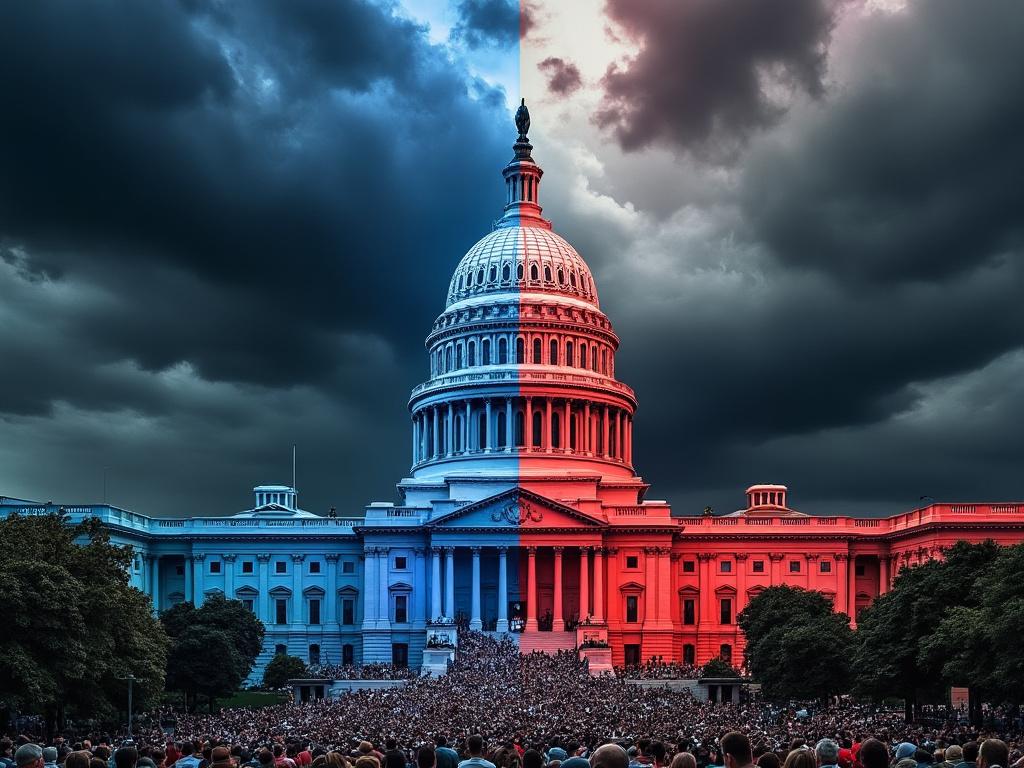
The unfolding political crisis in Texas over redistricting has captured national attention, highlighting a high-stakes fight that involves legal battles, partisan conflicts, and critical implications for both state and national electoral power. This article delves into the critical aspects of this dramatic dispute.
The Core of the Conflict
The Core of the Conflict reveals the layered intricacies behind Texas Republicans’ decision to redraw congressional districts ahead of the usual post-census schedule. Anchored by support from high-profile figures like former President Donald Trump and Governor Greg Abbott, this strategic maneuver is purported to secure a Republican stronghold in Congress. Opposing voices accuse this action of gerrymandering, claiming it manipulates district lines unethically to dilute Democratic votes, particularly those of minority communities who have shown increasing electoral significance. Legal battles hinge on accusations of violating both federal and state laws meant to ensure fair representation, while demographic shifts suggest a diversifying Texan electorate whose political affiliations might not align with the proposed redistricting maps. These elements collectively underscore a broader national debate over the balance of power and the integrity of democratic processes.
Democratic Exodus and Legislative Standstill
In a bold countermeasure to the redistricting plans championed by Texas Republicans, Texas House Democrats orchestrated a strategic exodus by exiting the state, a move underpinned by an urgent desire to protect minority voting rights and uphold democratic norms. Traveling primarily to Democratic strongholds, they strategically thwarted the quorum necessary for legislative actions, putting a temporary halt on controversial bills and casting a glaring national spotlight on the state’s political strife. This flight did not come without significant personal and political stakes. The Democrats faced potential legal actions and severe career ramifications, underscoring their commitment to democracy. Their actions not only underscored the intense power struggle but also questioned the very integrity of democratic processes in one of America’s most politically dynamic states.
Governor’s Tactics and Legal Threats
In response to the Democratic walkout, Governor Abbott’s tactics were both aggressive and unprecedented. He swiftly issued orders for the arrest of the absent lawmakers upon their return to Texas, intending to compel them back into legislative session. Furthermore, Abbott utilized legal threats as a tool of political leverage, aiming to deter future resistance. This stern approach spurred a significant legal debate over the constitutional limits of such gubernatorial powers. Within the heated political environment, these actions not only intensified the partisan divide but also raised critical questions about the erosion of democratic norms in state governance. Public reaction was polarized; some saw Abbott’s moves as essential for legislative function, while others viewed them as authoritarian overreach. This scenario speaks volumes about the ongoing struggle for power in Texas politics and sets a contentious backdrop for the upcoming legislative proposals.
National Ramifications and Partisan Strategies
The high stakes of Texas’s redistricting skirmishes transcend state borders, impacting the broader tapestry of American electoral politics. Prominent figures like former President Donald Trump have framed Texas’s redistricting efforts as a justified recalibration of power, which resonates with some national Republican strategies aimed at solidifying conservative dominance in Congress. Contrasting sharply, strongholds in Democratic states view such maneuvers as subversions of democratic norms, intensifying calls for federal interventions in redistricting nationally to ensure fairness. The strategic implications are profound: as Texas redraws its electoral maps, it could significantly shift the balance in the U.S. House of Representatives. Both parties deploy historical gerrymandering tactics, but with modern technological precision, making current strategies even more potent and controversial. This tit-for-tat in political strategy not only reflects existing partisan divides but could also radically influence voter turnout and party control in upcoming national elections, echoing Texas’s local battles on a national stage.
Broader Context and Future Implications
In the heated cauldron of Texas politics, the redistricting saga manifests as a battleground where demographic shifts and increasing diversity could reshape political landscapes. This reckoning has the potential to ignite rigorous legal challenges, possibly reaching as high as the Supreme Court, which may set precedent for future redistricting efforts nationwide. As Texas confronts growing calls for voting rights protections, any legislative adjustments or court decrees could recalibrate access and influence for marginalized groups, affecting both the efficacy and perception of electoral justice.
The reverberations of these outcomes will shape voter confidence and participation rates, impacting the strategic calculus of both major parties. How Republicans and Democrats respond and adapt may redefine battleground districts not only in Texas but across the U.S., influencing the overarching narrative of American democracy. This saga, observed globally, tests the resilience of democratic institutions against the temper of partisan ambitions, risking international reputation concerning fairness and electoral integrity.
Conclusions
The Texas redistricting dispute signifies a critical juncture in American politics, highlighting deep divisions and the extreme lengths parties will go to assert control. It underscores the ongoing challenges in ensuring fair and democratic representation, the profound impact of state actions on national politics, and the enduring fight for voting rights in a polarized environment.