
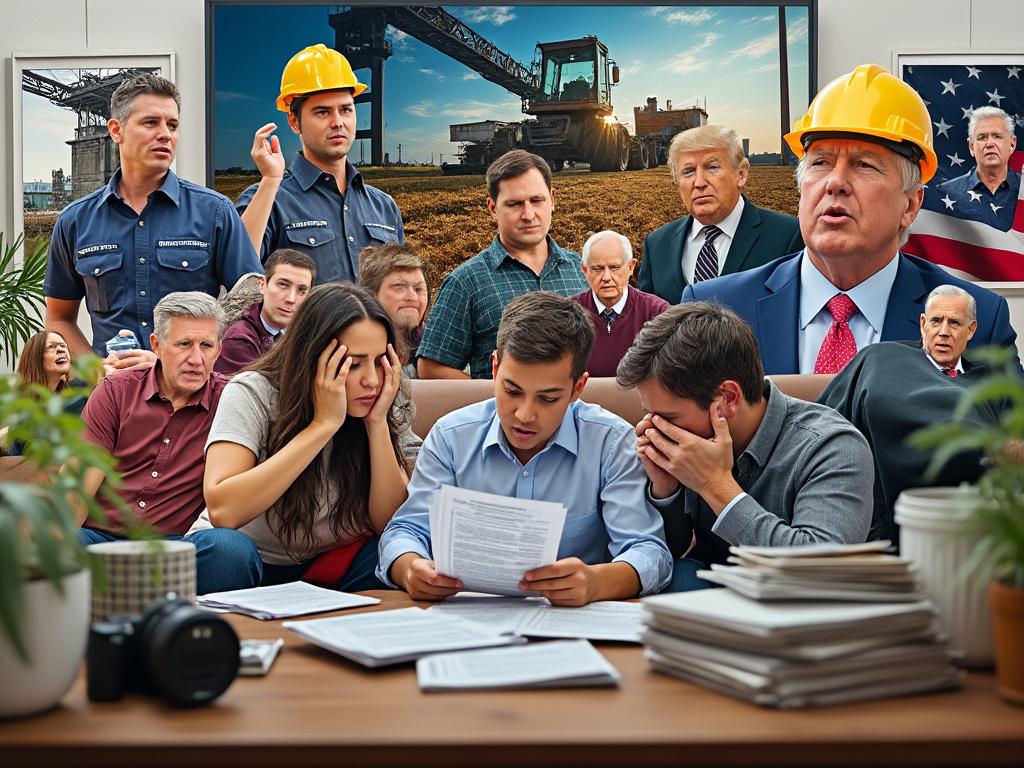
As former President Donald Trump champions aggressive tariffs as a keystone of his 2024–2025 agenda, concerns mount among Republican lawmakers. These policies, they argue, could hinder economic growth, elevate costs for American households, and undermine the US economic landscape.
Mounting Economic Costs for Households and Businesses
Economic models from the Penn Wharton Budget Model and Yale Budget Lab paint a grim picture of the long-term repercussions from the proposed Trump tariffs. These projections reveal a considerable dip in GDP alongside sharp reductions in average wages and lifetime earnings for typical American households. Detailed analyses highlight that middle-income families will experience significant financial pressures as the cost of daily essentials, such as groceries and automobile products, increases. An upsurge in expenses for these essential goods not only squeezes household budgets but also impairs corporate profitability. As companies face heightened production and operational costs, the broader economic landscape risks entering a phase where reduced consumer spending and corporate investment stifle overall economic momentum. This sets the stage for a deeper exploration into the specific effects on growth, investment, and employment in subsequent discussions.
Impacts on Growth, Investment, and Employment
Financial institutions like J.P. Morgan Global Research are revising US GDP growth forecasts downward due to the newly introduced tariff policies on steel and aluminum, suggesting a somber economic future. A pronounced 25% increase in tariffs has led analysts to predict shrinking investment opportunities as companies grapple with higher input costs. This situation is exacerbated by potential retaliatory measures from key trade partners, who might impose their own tariffs, further straining international trade relations. Historically, during Trump’s first term, such aggressive trade policies contributed to manufacturing and export sectors underperforming. In the face of global competitiveness, these sectors might see significant operational disruptions, harming overall employment rates in industries reliant on imported materials. This analysis highlights the real risk such policies pose, overshadowing the supposed benefits of protecting domestic industries.
Republican Dissent From Private Concerns to Public Criticism
Republican lawmakers, historically proponents of conservative economic policies, are increasingly vocal in their critique of Trump’s tariff approach. Initially silent, many in the GOP have shifted from private concerns to public censure. This pivot primarily hinges on adverse impacts witnessed first-hand from constituent industries, notably agriculture and small businesses, which are pivotal to their electoral bases. For instance, soybean farmers have faced severe market losses in China—a direct consequence of retaliatory tariffs. Agricultural states have reported substantial economic strains, compelling Republican senators to openly challenge the administration’s strategy. This growing dissent within the party illustrates a significant conflict: balancing nationalist economic policies against the stark realities of global interdependence and the foundational principles of free trade, historically championed by the party. As these realizations take root, the internal strife within the GOP deepens, spotlighting a critical divide between traditional Republican economic doctrines and the current administration’s aggressive trade maneuvers. The feedback from affected sectors, coupled with compelling economic data indicating potential long-term damage to the U.S. economy, serves as a catalyst for this burgeoning opposition. This shift underscores an emergent acknowledgment that ‘America First’ policies, while politically resonant, may lead to adverse economic repercussions contrary to the anticipated outcomes of fostering domestic growth and stability.
Unprecedented Scale and Uncertainty
The unpredictability and scale of President Trump’s tariff threats pose significant risks to the U.S. economy, introducing a level of uncertainty not typically associated with conservative trade policies. By threatening to implement high tariffs without sector exemptions, Trump undermines the stability that businesses, both domestic and international, rely upon to make long-term investments and strategic decisions. Economists warn of potential severe consequences: stifled international trade may lead to isolationist tendencies while skyrocketing inflation rates could deteriorate the purchasing power of the American consumer.
More alarmingly, high and erratic tariffs generate significant deterrent effects on global investments. Foreign investors seek stability and predictability in their investment landscapes; thus, capricious policy environments are likely to repel rather than attract the capital necessary for sustained economic growth. Experts utilize economic models like the dynamic stochastic general equilibrium model to predict how such tariffs could lead to long-term stagnation in capital inflows, ultimately eroding the United States’ position as a top global investment destination.
Limited Policy Offsets and Diminished Fiscal Benefits
Proponents of Trump’s tariff policies have often argued that these measures serve a dual purpose: protecting American jobs and generating substantial fiscal revenue. However, detailed analysis, including insights from the Penn Wharton Budget Model, suggests that while tariffs might provide a short-term increase in government revenue, the broader economic consequences are markedly negative. The immediate fiscal benefits are overshadowed by long-term detrimental effects such as reduced international capital flows, which are crucial for investment and growth. Similarly, tariffs lead to higher interest rates, increasing the cost of borrowing and squeezing corporate and consumer spending.
Moreover, competitiveness on the global stage is compromised due to retaliatory measures by other countries and increased costs of raw materials. This dynamic is crucial to understand following the unpredictability in trade policy discussed in the previous chapter, which heightened market uncertainties. Such ramifications discourage not merely international, but also domestic investments, with companies hesitant to commit capital amidst volatile costs and potential supply chain disruptions. This ultimately raises the question of the true net benefit of broad-based tariffs compared to more targeted, less disruptive fiscal measures.
Conclusions
While Trump’s tariff policies are touted as economic enhancers, mounting evidence suggests otherwise. High tariffs may lead to significant revenue but at the cost of broader economic distress, impacting prices, growth, and political harmony within the GOP. The looming tariff debate is likely to stir intensive political and economic discourse through 2026.