
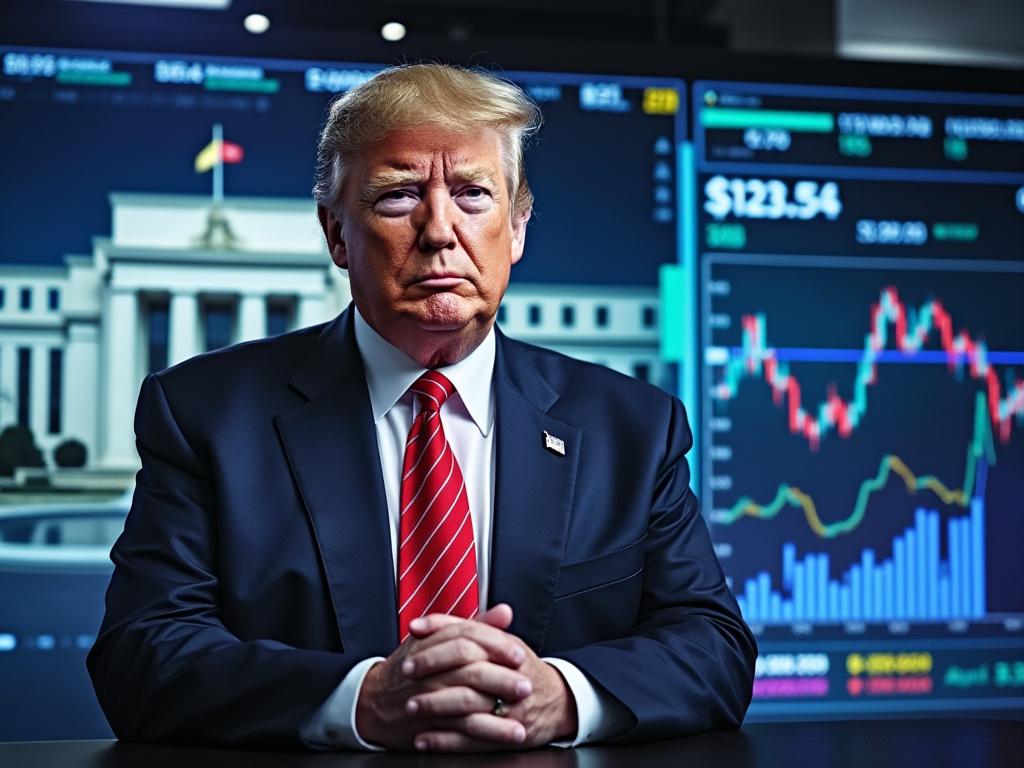
President Donald Trump’s upcoming appointments to the Federal Reserve and the Bureau of Labor Statistics (BLS) are poised to significantly influence US economic policy. These changes come at a critical time, with debates intensifying over interest rates, inflation, and employment.
Background: Key Departures and Their Context
In a surprising turn of events, Adriana Kugler’s resignation from the Federal Reserve Board of Governors and the dismissal of BLS Commissioner Erika McEntarfer have stirred significant discourse. Kugler’s departure, attributed to undisclosed personal reasons, coincided with heightened scrutiny over Fed policies amid inflation concerns. Concurrently, McEntarfer’s termination, officially framed as a performance-based decision, raised eyebrows, given her vocal discrepancies with administration’s labor statistical methodologies. These events underscore a critical juncture in President Trump’s economic strategy, reflecting a potentially transformative shift in the administration’s handling of economic data and monetary policy. Notably, sources like Axios and Business Insider suggest these moves may also be motivated by desires to realign these institutions’ stances more closely with broader economic policies advocated by the White House.
Why These Roles Matter
The Federal Reserve Board of Governors and the BLS Commissioner are pivotal in steering national economic policy. The Fed governors influence interest rates, which in turn affect everything from consumer spending to business investment. Their decisions on monetary policy can either fuel growth or combat inflation, impacting the broader economy significantly. Meanwhile, the BLS Commissioner’s role, involving oversight of labor market reporting, directly impacts how employment data is interpreted and understood. Accurate employment data are crucial for shaping economic policies and for the Federal Reserve’s decisions.
By naming new leaders to these roles, Trump can significantly sway these institutions’ directions. This capability to appoint key figures allows an administration to imprint its philosophy on economic governance, potentially aligning it more closely with its policy goals. For instance, appointing a Fed governor who favors lower interest rates could support an agenda aimed at stimulating economic growth. Conversely, a BLS Commissioner inclined towards more comprehensive labor data can enhance transparency in job markets’ real statuses, affecting policy decisions on wages and unemployment benefits.
Given these roles’ direct ties to economic health, Trump’s upcoming appointments are poised to set new precedents in how economic data will drive national policies under his influence. According to CFR, such decisions will also resonate through global markets, underscoring U.S. economic leadership’s role. Business Insider highlights that stakeholders are particularly attentive to how these appointments may recalibrate fiscal strategies moving forward. These moves become even more significant in the context of recent departures, suggesting a potential shift towards a distinct economic governance style under Trump’s administration.
Reactions and Implications
Reactions and Implications: Following President Trump’s announcement to appoint new leaders for the Federal Reserve and BLS, a mixture of skepticism and optimism echoed through financial circles. Investors were cautiously hopeful, as insights from CFR suggest potential market stability with a pro-business tilt. However, economic analysts from leading institutions worried about a possible erosion of policy objectiveness, fearing that appointments could pivot towards overly accommodative monetary policies aimed at shorter-term gains.
Political responses varied widely, with Republican figures largely endorsing the move as a step towards stronger economic growth, while Democrats expressed concerns about the independence of these crucial economic pillars. The overall sentiment suggested that these changes could lead to significant shifts in how monetary policies are crafted, potentially influencing inflation rates and employment strategies in ways aligned more closely with business interests than broader economic health.
Who Could Be Nominated
Speculating on potential nominees, attention turns to figures like Judy Shelton, known for her advocacy of a gold standard and criticisms of the Federal Reserve’s policies. Her views align closely with Trump’s frequent calls for lower interest rates. Another potential candidate might be Christopher Waller, Executive Vice President at the St. Louis Fed, whose stance on inflation and monetary policy could harmonize with the current administration’s economic objectives. Prospective nominees for the Bureau of Labor Statistics (BLS) chief could include individuals with strong backgrounds in statistical methodology and pro-business viewpoints, possibly reflecting Trump’s emphasis on favorable economic reporting. The nominating process, involving scrutiny from both the Senate Banking Committee and confirmation votes, might sway the final decision, reflecting not only on their professional qualifications but also on their political alignments and past policy endorsements. These appointments could pivotally reshape US economic policy toward Trump’s vision.
Broader Significance: Institutional Independence Under Strain
The potential reshaping of the Federal Reserve and Bureau of Labor Statistics under the Trump administration raises significant concerns regarding the independence of these pivotal economic institutions. Historically, their autonomy has been sacrosanct, ensuring that economic decisions are insulated from political pressures and aligned solely with broader economic indicators and analysis. However, inserting overtly political appointees could compromise this independence, tipping the balance towards policy that mirrors current administration goals rather than objective economic necessity. Critics, including several economists and advocates from the Council on Foreign Relations (CFR), warn of the potential erosion of institutional integrity. Such shifts might not only affect domestic economic policy but could also undermine international confidence in U.S. economic leadership, which has been predicated on the unbiased and apolitical analysis these institutions are known for. The careful preservation of this balance between necessary political oversight and essential economic objectivity is now hanging in the balance, poised to redefine the role these institutions play in the shaping of U.S. economic policy.
Conclusions
President Trump’s decisions to appoint new leaders to the Federal Reserve and BLS could reshape US economic policy, affecting everything from interest rates to job reports. These moves, occurring amid ongoing debates about economic recovery and stability, signal a strategic push to align federal economic policy more closely with Trump’s economic agenda.