
A recent ruling by a federal appeals court has upheld restrictions against the Department of Homeland Security’s (DHS) broad immigration sweeps in Los Angeles, setting a significant precedent in the ongoing battle over immigration enforcement and constitutional rights.
The Context of the Ninth Circuit’s Ruling
The Ninth Circuit’s ruling was precipitated by highly controversial immigration sweeps during the Trump administration, particularly noted for targeting communities based on language and physical appearance. Such practices incited significant public outrage and legal challenges, arguing that they breached fundamental rights and discriminated against non-English speakers and people of certain ethnic backgrounds. These sweeps often occurred in workplaces and neighborhoods with high concentrations of immigrants, where agents purportedly used profiling to question and detain individuals, leading to accusations of constitutional violations. This backdrop of aggressive enforcement policies underpinned the legal scrutiny and subsequent judicial intervention, marking a critical juncture in the debate over lawful immigration enforcement versus individual rights.
Details of the Court’s Findings
In a pivotal ruling, U.S. District Judge Maame Ewusi-Mensah Frimpong declared that immigration enforcement actions must be predicated on reasonable suspicion, rigorously critiquing practices centered on race, ethnicity, and language. The court emphasized the constitutional infringements inherent in detaining individuals based primarily on these characteristics, spotlighting potential violations of the Fourth and Fourteenth Amendments, which safeguard against unreasonable searches and ensure equal protection under the law, respectively. The decision meticulously parsed the legal underpinnings of racial profiling, illustrating that the deployment of such criteria not only undermines the principles of justice but also perpetuates discriminatory enforcement policies. In dissecting specific instances of sweeps, the judgment highlighted cases where the lack of legitimate basis for suspicions was overt, underlining the critical need for adherence to constitutional mandates in all operations by the Department of Homeland Security (DHS).
Implications for Immigration Policy and Law Enforcement
The Ninth Circuit’s recent decision places enduring constraints on agencies such as ICE and CBP, compelling them to refine operational tactics away from language and job-dependent profiling. This shift not only reassures the immigrant community regarding their constitutional protections but also necessitates rigorous alignment of law enforcement strategies with the judicial expectations set forth by the ruling. Subsequently, this reorientation likely demands additional training for officers, refinement of procedural manuals, and the adoption of new compliance mechanisms to ensure that detentions are carried out based on constitutionally valid grounds only. Furthermore, this recalibration helps balance maintaining national security with upholding lawful and equitable treatment of individuals, thus fostering a lawful approach that upholds the integrity of constitutional rights.
Community Response and Public Opinion
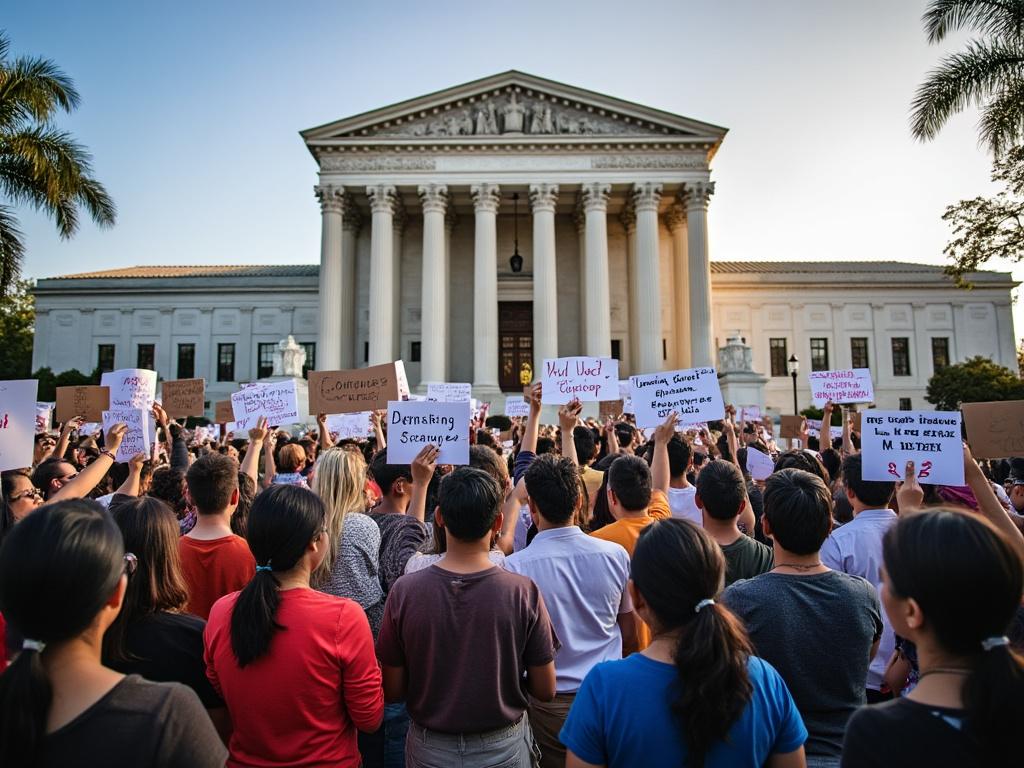
In the wake of the Ninth Circuit’s decision, Southern California has witnessed a palpable shift in community dynamics, with responses significantly articulated through activism. Immigration advocacy groups, emboldened by the ruling, organized multiple rallies and community forums to educate residents on the nuances of the decision and its implications. These gatherings served not only as informational hubs but also as spaces for collective relief and cautious optimism among immigrant communities.
Public opinion varied, with a notable division between supporters of stricter immigration control and those advocating for the rights of immigrants. However, the prevailing sentiment in immigrant-heavy neighborhoods was one of hopeful anticipation. Such areas saw spontaneous expressions of gratitude toward the judiciary, reinforcing the community’s engagement and resilience in face of broader national debates. Local businesses and community leaders played pivotal roles, offering resources and support to those affected by past sweeps, thereby reinforcing community bonds and a collective identity centered around shared experiences and a quest for justice.
The Future of Immigration Enforcement
Following the community’s fervent reactions, the future of immigration enforcement in the U.S. is poised for significant evolution. The appellate court’s decision could permanently alter the Trump administration’s immigration tactics, emphasizing more specified and constitutionally compliant methodologies rather than broad sweeping actions dependent on generalized criteria like language and job type. This ruling may trigger a wave of further legal challenges, where advocacy groups could leverage this precedent to contest similar operations nationwide. Simultaneously, this scenario is likely to fuel already intense debates on immigration policy, influencing legislative approaches and potentially reshaping enforcement strategies on a federal scale. Lawmakers might be driven to create clearer guidelines that ensure enforcement aligns with constitutional protections while addressing national security and economic needs. This pivotal moment underscores a critical reevaluation of policy and practice in immigration enforcement.
Conclusions
The recent court ruling represents a pivotal assertion of constitutional safeguards in immigration enforcement. This decision not only underscores the judiciary’s role in checking executive overreach but also reaffirms the importance of individual rights against broad and indiscriminate governmental actions.