
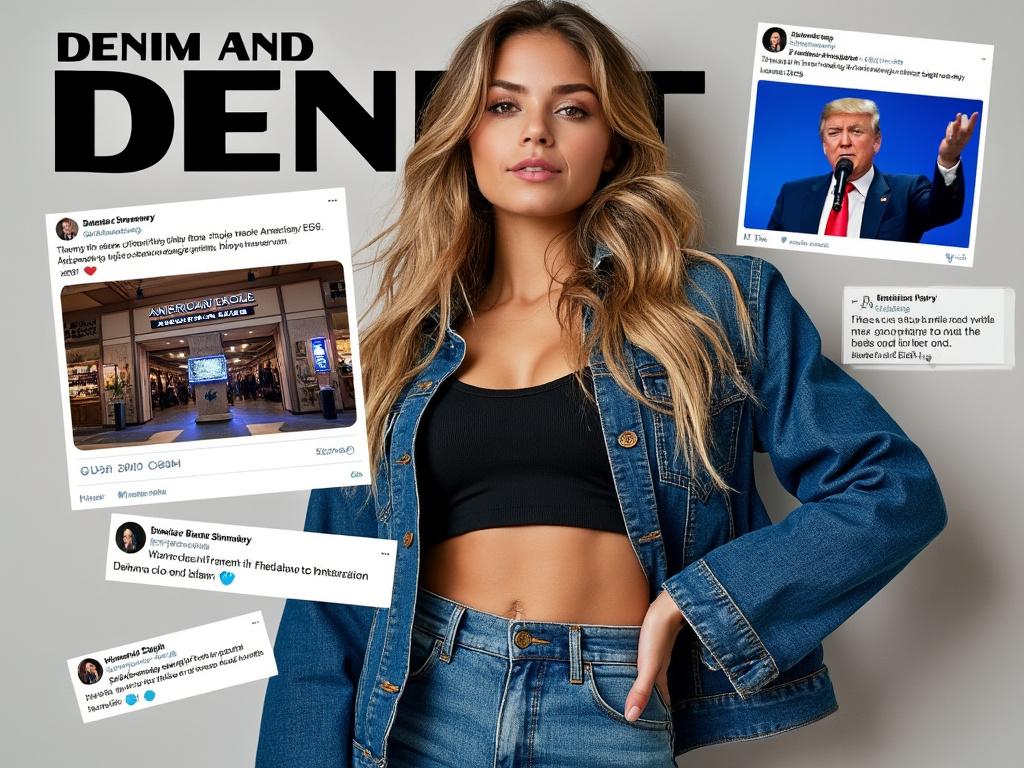
The release of Sydney Sweeney’s American Eagle ad and subsequent endorsement by Donald Trump escalated a simple marketing campaign into a cultural and political spectacle. This article delves into the dynamics of beauty standards, celebrity influence, and political endorsements that shaped this narrative.
The Ad and Its Immediate Impact
The initial unveiling of the American Eagle campaign titled ‘Sydney Sweeney Has Great Jeans’ cleverly encapsulated wordplay intended to highlight not only the product but the ethos surrounding the prominent actress, Sydney Sweeney. The ad showcased Sweeney in various denim outfits, which ostensibly celebrated diverse beauty and body positivity. The campaign’s approach to leveraging Sweeney’s cultural capital, however, swiftly ignited a spectrum of reactions across social media platforms.
Critics and supporters alike took to platforms like Twitter and Instagram to voice opinions that transcended beyond mere fashion commentary. The wordplay “Great Jeans,” suggesting genetic superiority, raised eyebrows, evoking discussions about racial considerations and the often contentious arena of body image standards in advertising. These conversations underscored the thin line between clever marketing and the potential insensitivity towards broader societal issues. This discourse shed light on how clothing brands could trigger widespread sociopolitical debate. The controversy underlined the increasing scrutiny on inclusivity and representation in marketing, highlighting a growing public demand for more than just aesthetic appeal in advertising narratives.
Trump’s Intervention and the Partisan Spark
When former President Donald Trump put his weight behind the American Eagle campaign featuring Sydney Sweeney, the ad took on a new dimension. Trump’s approval came after rumors of Sweeney’s Republican affiliation began to circulate, prompting him to declare on his Truth Social platform that if Sweeney was indeed a Republican, he found the ad “fantastic”. This public endorsement not only magnified the campaign’s visibility but also ignited a partisan response that polarized consumer reactions. Trump juxtaposed Sweeney’s campaign with other marketing efforts he labeled as failures of ‘woke’ advertising, influencing his vast follower base and beyond.
The immediate response saw a noticeable uptick in American Eagle’s stock prices as Trump supporters rallied around the brand, viewing their support as an alignment with their political ideologies. Conversely, this endorsement also sparked backlash from those opposed to Trump, who then viewed the brand with suspicion or disapproval. The dichotomy of reactions underlined the potent mix of politics and consumer brand perception in the modern marketplace, suggesting a complex interplay between celebrity endorsements and political affiliations in shaping brand identity and consumer behavior.
The Politics of Celebrity Endorsements
The revelation of Sydney Sweeney’s possible Republican leanings not only shaped the dynamics of her involvement with American Eagle but also incited a broader conversation about the nexus between celebrity politics and brand identity. The assumption of Sweeney’s political stance, hastened by Trump’s glowing approval, polarized public and consumer reaction, showcasing how celebrity political affiliations can significantly impact brand association. Supporters of Trump lauded the endorsement, viewing the campaign and Sweeney more favorably. Conversely, critics who oppose Trump’s policies displayed discomfort or boycotted, viewing her ad as politically tainted. This duality highlights an increasingly fraught landscape where brands are roped into political arenas, often unwillingly, as their celebrity endorsers’ political alignments become public. This environment makes clear the fine line companies must walk in leveraging celebrity endorsements without alienating segments of their consumer base, encapsulating a challenging dilemma in modern marketing strategies. Despite the heated discourse, this scandal underscored the undeniable pull of celebrity in shaping political narratives within commercial contexts.
Wider Cultural and Market Resonance
When Donald Trump praised Sydney Sweeney’s involvement in American Eagle’s campaign, assuming her potential Republican alignment, the effect was both immediate and profound. American Eagle cleverly utilized the controversy, not shying away but rather amplifying the debate around the advertisement. This choice tapped into the growing trend of political branding, where consumer loyalty often intersects with political allegiance. The controversy boosted the campaign’s visibility exponentially, serving as a case study in utilizing political volatility to a brand’s advantage. The surge in online discussions drove increased traffic to American Eagle’s platforms, demonstrating the potent combination of celebrity influence and political commentary in modern marketing.
This instance also signifies a broader cultural movement where brands no longer merely represent lifestyle choices but are seen as platforms for political expression, risking polarization in consumer bases. Yet, American Eagle managed to capitalize on this division, suggesting a nuanced strategy in navigating politically charged communications that paradoxically increased their market share amidst the divided public sentiment.
Conclusion
In concluding, the Sydney Sweeney American Eagle campaign illustrates the multifaceted dance between commercial, political, and cultural domains in contemporary marketing. The endorsement by Donald Trump, irrespective of one’s political leanings, exemplifies the complex ramifications for a brand when a polarizing figure voices support. This situation highlights American Eagle’s navigation through a politically charged landscape, skillfully balancing broad appeal with the risk of alienation. This phenomenon underscores a critical learning curve: modern brands must be agile and strategically aware, ready to either capitalize on or mitigate the fallout from sudden political endorsements. The intersection of fashion advertising and celebrity politics, as showcased in this campaign, could lead to a national dialogue, emphasizing the unpredictable outcomes of merging these spheres. Brands tread a fine line, reflecting the divided socio-political American fabric, demonstrating that in today’s market, cultural intelligence is just as crucial as financial acumen.
Conclusions
The Sydney Sweeney American Eagle jeans ad campaign evolved from a simple play on words into a significant cultural debate, magnified by Donald Trump’s endorsement. This episode underlines the potent mix of media, politics, and commerce in shaping public discourse and consumer behavior, reflecting a deep division in consumer culture and political affiliation in modern America.