
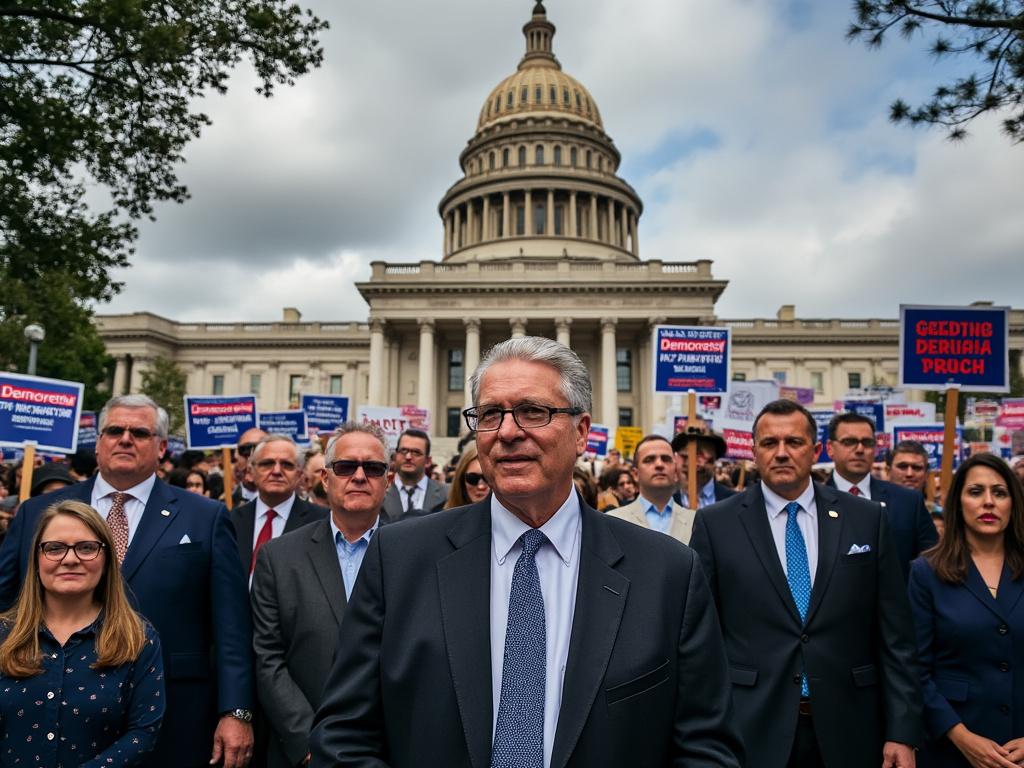
In August 2025, Texas became the battleground for a significant political standoff as State Representative James Talarico led a Democratic walkout to block a redistricting plan. This confrontation, highlighting issues of power, civil disobedience, and the future of democracy, has captured national attention.
The Quorum-Breaking Walkout
In August 2025, Texas State Representative James Talarico, along with his Democratic colleagues, orchestrated a strategic exit from Texas to deny Republicans the necessary quorum to pass a contentious redistricting bill during a special legislative session. This bold decision came as a climax in a series of legislative battles over what Democrats viewed as a blatant attempt to dilute minority voting strength across the state, particularly in rapidly diversifying suburbs. Talarico argued that the proposed maps were not only politically motivated but would also undercut fair representation, fueling further polarization. By leaving the state, the Democrats triggered a high-stakes legal and political standoff, highlighting the lengths to which they were prepared to go to fight for democratic principles.
With every seat and vote under intense scrutiny, the walkout did not just prevent the immediate passage of the redistricting bill—it also thrust the issue into the national spotlight, prompting discussions on the integrity and fairness of electoral processes. The move garnered substantial support and criticism alike, setting the stage for a broader national debate on the rights of state legislatures versus the rights of individual citizens under the U.S. Constitution. As lawsuits were quickly filed against the absent Democrats, questions about the legal repercussions of such walkouts and their effectiveness as a legislative strategy became a focal point of contention among constitutional scholars, with Talarico at the center of the discourse.
James Talarico: The Spokesman and Rising Star
James Talarico, a poignant figure in Texas politics, personifies dedication and strategic foresight. His meteoric rise to the forefront of the walkout was not merely a matter of circumstance but a reflection of his commitment to democratic values. Talarico, who first gained attention upon his election in 2018, swiftly established himself as a persuasive voice, especially among younger, progressive Texans. The decision to lead his colleagues in the walkout was underpinned by profound personal and professional sacrifices, risking censures and future electoral prospects. This bold move, however, considerably amplified his visibility, earning him widespread acclaim from national Democratic figures. These endorsements not only bolstered his stature within the party but also positioned him as a formidable advocate for voting rights on the national stage, navigating extensive media coverage to articulate the walkout’s aims. Talarico’s actions, symbolizing a fervent defense of participatory democracy, highlighted the growing fissures within Texas’ political landscape, serving as a catalytic event for greater national discussions on equitable representation.
Republican Response: Legal Threats and Political Pressure
In response to the Democratic walkout led by James Talarico, Republican lawmakers and Governor Greg Abbott employed a range of legal and political counteractions. Most notably, Governor Abbott, emphasizing the need to maintain legislative order, threatened the application of state laws that could enforce fines, jail time, or even unseat the absent lawmakers. Moreover, the Texas House voted to issue civil arrest warrants to compel the Democrats’ return, asserting that such measures were crucial for democracy and legislative function. This response underlined the high stakes of redistricting battles, viewing the walkout not just as a procedural delay but as a direct challenge to legislative authority. The Republican stance was clear: disciplinary actions were justified to safeguard the integrity of the state’s legislative processes.
Historical Context and Precedent
Legislative walkouts, while dramatic, are not new in the theatre of American politics; instead, they encapsulate a long-standing tradition of procedural dissent. Historical antecedents stretch back to the 19th century. For instance, in 1840, over fifty Whigs in the Pennsylvania Senate resigned to prevent the passing of a Divorce Bill. The Texas Legislature itself experienced a major walkout in 2003 when more than 50 Democratic House members fled to Oklahoma to stymie a Republican-led redistricting plan. Similarly, in 2011, Wisconsin saw Democratic state senators decamp to Illinois to block a vote on a contentious budget restricting collective bargaining for public employees.
Walkouts serve as a potent strategy to halt legislative processes, albeit temporarily, highlighting deep-seated issues within governance structures. Critics argue these actions undermine democratic processes and eschew formal debate. However, proponents believe walkouts are essential when traditional legislative avenues appear compromised, particularly when the stakes involve significant issues like redistricting, showcasing a practical—if polarizing—tool for minority parties.
In this light, walkouts underscore the critical balance between legislative procedures and the imperative to represent constituent interests effectively, especially under the shadow of potential partisan overreach. As seen in historical cases, the outcomes vary, but walkouts undoubtedly amplify the political dialogue around the contentious issues at stake.
Talarico: ‘It’s Time to Fight Back’
James Talarico, spearheading the Democratic walkout, articulated that the redistricting plan was a blatant “power grab” by the majority, compromising fundamental democratic tenets. Talarico, appealing both to legal precedents and democratic ideals, stressed that redistricting should promote fair representation, not marginalize voices. He asserted that the plan disturbed the balance, favoring dominant party control over electoral fairness. In defense, Talarico highlighted the necessity of the walkout as a strategy to stall proceedings, thereby protecting the integrity of Texas’s democratic processes. As the standoff unfolded, Talarico and his colleagues prepared for extensive legal battles and public awareness campaigns to combat the overreach, framing their actions as essential in the larger struggle for democratic governance. This phase of the contest underscored their commitment to fight for equitable representation through all available avenues.
Conclusions
As Texas faces a critical moment in its political history, the actions of James Talarico and his colleagues represent more than just a legislative tactic; they symbolize a profound struggle for democratic principles. The outcome of this standoff will have lasting implications on governance, electoral integrity, and the balance of power not only in Texas but across the United States.