
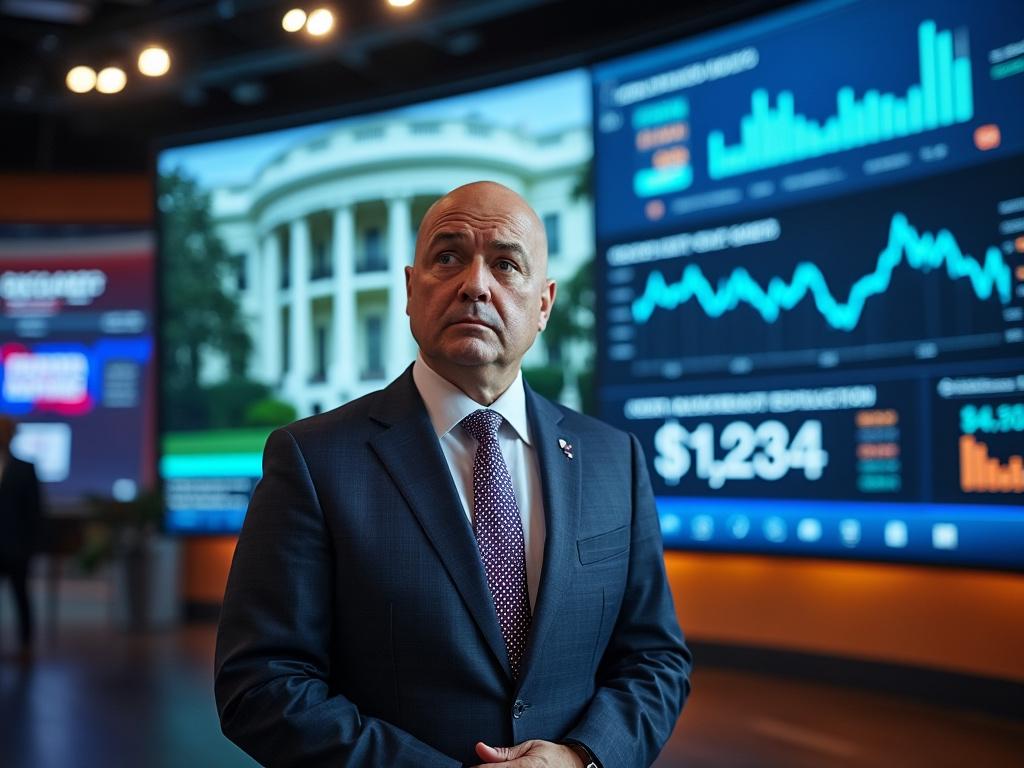
The recent dismissal of BLS Commissioner Erika McTarfer by President Donald Trump, following a contentious jobs report, has sparked fierce debate and criticism, notably from conservative businessman Kevin O’Leary. This article delves into the controversy, O’Leary’s reaction, and the potential consequences for U.S. economic integrity.
The Dismissal of Erika McTarfer
In the wake of President Trump’s dismissal of BLS Commissioner Erika McTarfer, influential businessman Kevin O’Leary voiced significant concern. His critique focused squarely on the broader implications of such political interventions in economic reporting agencies. O’Leary argued that dismissing McTarfer, particularly in response to an unfavorable jobs report, undermines the perceived objectivity and reliability of crucial economic data. He stressed that the integrity of these data sources is vital for investor confidence and overall economic stability. O’Leary’s public rebuke was especially potent given his previous endorsements of various Trump policies; this marked a notable departure and highlighted his serious apprehensions about potential long-term damage to economic credibility.
Kevin O’Leary’s Opposition
In his vocal critique, Kevin O’Leary highlighted the dangers of undermining the Bureau of Labor Statistics’ (BLS) objectivity through political interventions, such as the firing of Erika McTarfer. Stressing the nonpartisan nature of federal statistical agencies, O’Leary warned that such actions threaten the integrity of pivotal economic data, essential for investor confidence and policymaking. His opposition marked a notable departure from his usual support of Trump’s economic policies, emphasizing the principle that “you shouldn’t shoot the messenger” when displeased with the data’s narrative. This perspective not only underscores the importance of maintaining a depoliticized BLS but also signals significant concerns among conservative economic observers about the repercussions of politicizing economic reporting.
The Role and Importance of the BLS
The Bureau of Labor Statistics (BLS) plays a pivotal role in the U.S. economic structure by diligently gathering and analyzing a wide spectrum of data, crucial to both public policy formulation and private sector strategic planning. This includes vital statistics such as employment rates, wage data, and inflation indices—integral metrics that guide economic policies and investment decisions. Established as a staunchly nonpartisan entity, the integrity and independence of the BLS are fundamental. This not only ensures the reliability of data free from political bias but also, underpins market confidence and economic stability. Perturbations in its autonomy can lead to significant ramifications, spotlighting the necessity of safeguarding its impartiality against potential political incursions.
Political Reactions and Broader Implications
The unexpected dismissal of BLS Commissioner Erika McTarfer by President Trump has ignited a firestorm of political debate, revealing deep divisions on the issue of governmental control over ostensibly non-partisan agencies. Prominent figures from both sides of the aisle, including Democrat Senator Elizabeth Warren and Republican Senator Marco Rubio, have publicly criticized the decision, underscoring concerns over the integrity of federal statistical data. Media analysts have echoed these worries, highlighting potential dangers to investor confidence and economic policy making. Furthermore, a perceived politicization of economic data risks not only domestic market instability but also international credibility regarding U.S. economic reports. Such turmoil creates a precarious situation where public perception and trust in federal economic publications, crucial for policy making and private sector strategies, are jeopardized. The controversy aligns with broader apprehensions about the erosion of institutional neutrality in the face of increasing political interference.
The Future of U.S. Economic Reporting
The long-term impacts of such high-stakes interference with the Bureau of Labor Statistics (BLS) may profoundly shake the foundation of U.S. economic reporting. With the integrity of federal statistical bodies at risk, potential reforms might include legislative measures that strictly limit executive influence on appointment and dismissal processes. Additionally, the establishment of a non-partisan oversight committee could ensure that data integrity remains untainted by political agendas. Within the financial and business communities, there’s a palpable demand for untampered economic data. Trustworthiness in these statistics fosters not just national, but global market stability. The question remains whether these reforms can truly insulate such vital institutions from future political disruptions or if they are merely aspirational.
Conclusions
The controversy surrounding the firing of BLS Commissioner Erika McTarfer has underscored the delicate balance between politics and the integrity of economic data. Kevin O’Leary’s vocal criticism highlights a critical crossroads for U.S. economic credibility, stressing the importance of safeguarding the independence of statistical agencies against political pressures.