
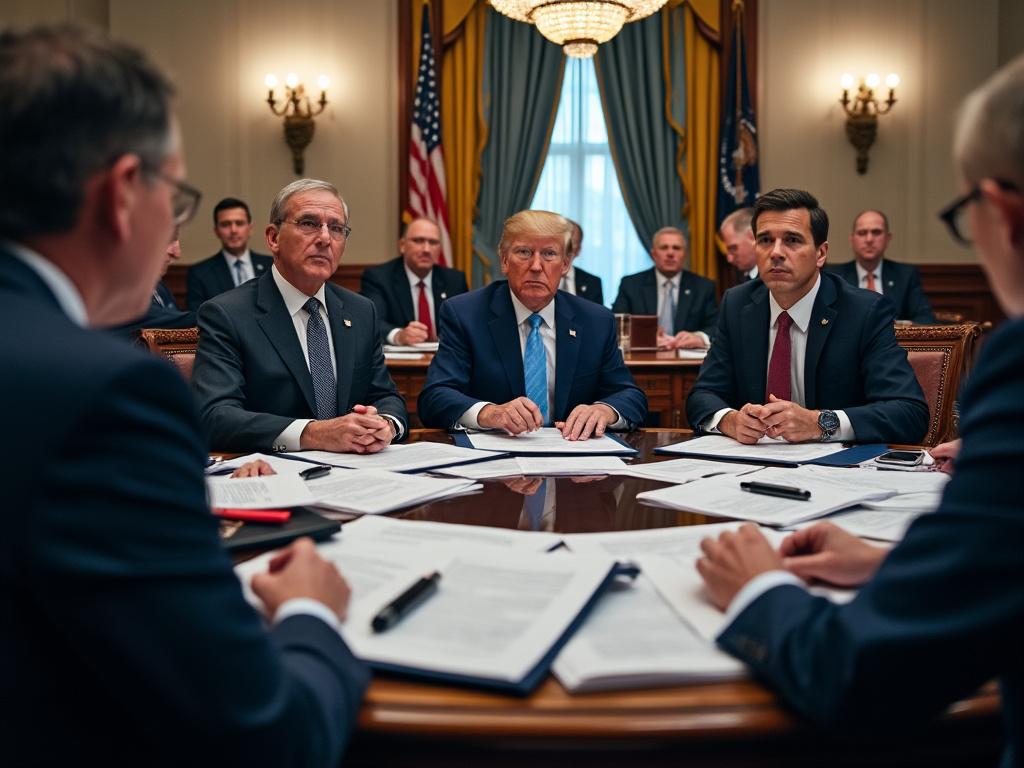
In a significant move just before their August recess, the Senate approved over $180 billion in funding for FY 2026. This article delves into the nuances of the appropriations process and the broader implications for federal priorities and programs.
Context and Structure of the 2026 Funding Bill
The 2026 funding bill stands as a pivotal element in the U.S. Senate’s fiscal strategy, marking a significant commitment with over $200.1 billion in base discretionary funding. Intricately constructed through a complex process involving multiple Senate committees and subcommittees, this bill underscores a comprehensive approach to federal budgeting. Each committee, such as those focusing on health, education, and defense, plays a crucial role, meticulously scrutinizing every funding allocation to ensure alignment with national priorities. Significant portions of the bill support essential agencies like the CDC, NIH, and the Department of Education, reflecting a targeted investment in public health, research, and educational advancement. This strategic distribution of funds not only addresses immediate societal needs but also sets a foundation for long-term national growth and stability, highlighting the Senate’s calibrated approach to governance through fiscal policy.
Key Spending Areas and Highlights
The Labor-HHS-Education appropriations within the 2026 funding bill see critical financial allocations essential for post-pandemic recovery and addressing educational inequities. A total of $90 billion is designated, maintaining robust support for public health, with a significant emphasis on global health initiatives and biomedical research. Notably, the National Institutes of Health’s Fogarty International Center receives increased funding to enhance global health collaborations. This bolsters international research partnerships crucial for controlling global health threats. Concurrently, education funding focuses on innovation and equity. These funds support programs enhancing access to quality education, particularly for underserved communities, and advance technological integration in educational settings to mitigate learning disruptions experienced during the pandemic. This strategic financial commitment aims to fortify societal foundations in health and education, ensuring resilience against future global challenges.
Potential Rescissions and Budget Adjustments
Following the passage of the significant $180 billion funding approval, further discussions on rescission packages and subsequent budget adjustments pose a potent threat to the actualization of some earmarked programs. The scope of these potential rescissions which is under intense negotiation, particularly targets earlier agreed upon excesses perceived during the fiscal evaluation of projects. At stake are vital health and education programs previously spotlighted, with funds potentially being withdrawn to counteract perceived overspending. This legislative tool, while balancing budgets, could inadvertently delay or diminish the earlier intended impact on vital sectors by reallocating resources to perceived high-priority concerns. Legislators remain divided; some vouch for strict adherence to the initial allocations, while others push for a dynamic reshuffling based on evolving fiscal priorities. The outcome of these legislative maneuvers will crucially shape the framework within which educational and health institutions operate, informing the directions of pivotal programs and initiatives.
Budgetary Context and Outlook
The Senate’s notable approval of over $180 billion in funding as they approached the August recess represents a critical alignment with the fiscal strategy outlined in the congressional budget resolution for FY 2025. This allocation underlines a pivotal shift towards strategic deficit reduction, with a strong emphasis placed on long-term fiscal responsibility. Importantly, the approved funds integrate concentrated efforts to align with previously set budget caps, which aim to curb government overspending and address the burgeoning federal deficit. The decisions embed potential spending reforms, notably in sectors earmarked for expansive growth and where waste reduction is paramount. However, these prudent fiscal measures are complicated by the presence of policy riders aimed at advancing certain legislative agendas. These additions often skew the purity of fiscal debates, especially within a Congress marked by deep political divides. The challenge, therefore, lies in balancing these policy aspirations with the stringent demands of fiscal rectitude, navigating a path that accommodates growth while ensuring sustainability and accountability.
Political and Procedural Dynamics
The Senate Appropriations Committee’s vote of 26-4 on the $180 billion funding approval notably reflects a substantial effort toward bipartisan cooperation. This broad consensus largely stemmed from shared goals to sidestep a looming government shutdown and maintain fiscal stability. Despite the vast approval margin, several underlying political tussles remain visible. Most notably, contentions arise around the distribution of funds across defense and domestic programs, reflecting deeper ideological divides. The procedural dynamics here showcase strategic legislative actions, such as the employment of omnibus packages to address multiple funding needs simultaneously, allowing senators to consolidate support across party lines. Crucially, this facilitates smoother negotiations by merging contentious issues with broadly agreeable ones, ultimately serving as a bulwark against fiscal paralysis. This chapter underscores the intricate dance between securing a balanced, bipartisan fiscal strategy and navigating the entrenched partisan flashpoints that persistently challenge such endeavours.
Conclusions
The Senate’s approval of over $180 billion in funding for FY 2026 represents a critical juncture in U.S. fiscal policy, reflecting both continuing needs and bipartisan cooperation. As agencies plan ahead with greater certainty, the appropriations set a cornerstone for government continuity and national priorities amidst a complex political landscape.