
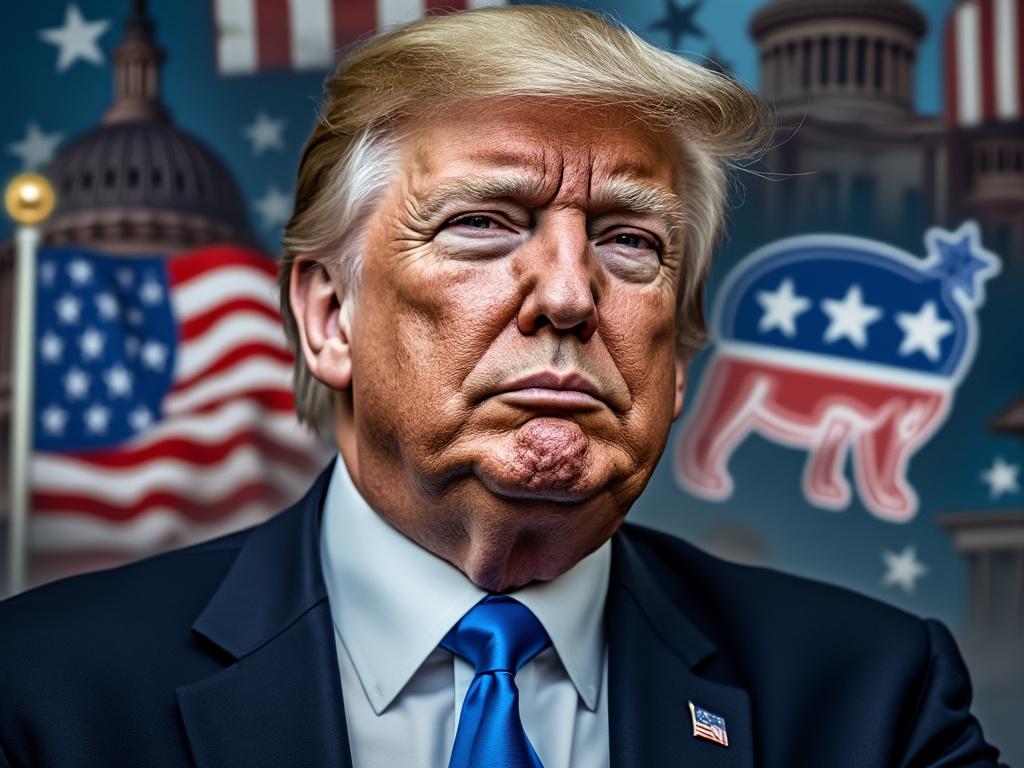
Amidst Donald Trump’s declining approval ratings in his second term, the Republican Party continues to demonstrate considerable political strength. This article explores the underpinnings of the GOP’s resilience and the challenges they face.
Latest Trends in Trump’s Approval
Since President Trump’s second inauguration, there has been a noticeable shift in his approval ratings among various demographic groups. Recent Gallup and Emerson College Polling data indicate that while his support remains robust within the Republican base, his overall numbers are suffering due to significant declines among independent voters. This trend is particularly pronounced on contentious issues such as immigration and the economy, where independents seem increasingly disillusioned with Trump’s policies. Analysis shows that while nearly 84% of Republican constituents maintain their support, only about 39% of independents approve of Trump’s handling of his presidential duties. This divergence is critical as it highlights a growing dissatisfaction that could influence the Republicans’ ability to appeal to the broader, unaffiliated voter segment in upcoming elections.
Republican Party Still a Strong Contender
Despite the declining approval ratings of President Trump, the Republican Party showcased remarkable resilience and strategic acumen in the 2024 elections. Their victories in key states and districts are emblematic of a significant political realignment, spearheaded by unified Republican voter support. The Republicans achieved notable legislative victories, which invigorated their base and drew independent voters disillusioned with progressive policies. The gains in the Rust Belt and the South reflect a shrewd recalibration of the Republican platform, emphasizing economic revitalization and law and order, resonating deeply with the electorate’s current concerns. These electoral successes underscore the GOP’s adeptness at maintaining relevance and momentum in the American political landscape, suggesting robust party machinery that transcends individual personalities.
Challenges Ahead
While the Republican Party managed unexpected gains in the 2024 elections, President Trump’s popularity has notably diminished among independents and critical demographic groups such as suburban voters and younger constituents. Recent polls indicate a decisive shift, with a decline in approval ratings from 45% to 38% among independents who were pivotal in his initial election victory. This decrease poses significant vulnerabilities for the GOP, especially in purple states critical for the 2026 Senate races. Furthermore, a fading appeal among Latino voters, who are increasingly critical in swing states like Arizona and Florida, underscores deeper problems. The party’s reliance on a narrow base may not suffice amid a demographically changing electorate. This trend suggests a pressing need for strategic recalibrations as the party faces a landscape where its traditional messages resonate less beyond its core supporters.
Exploring Voter Sentiment and Issue-Based Performance
Despite President Trump’s overall declining approval ratings, a closer analysis of recent poll data reveals a nuanced picture of how Americans perceive his presidency’s impact on specific issues. Notably, Trump continues to garner stronger support in areas like the economy where his policies are perceived as beneficial by certain demographic segments. Conversely, his approach to immigration has elicited substantial criticism, contributing to lower approval scores in polls. These contrasting sentiments underscore the challenge for the party as they pivot toward future electoral strategies.
A demographic breakdown reveals that older, rural voters remain Trump’s steadfast supporters, particularly praising his economic policies, whereas younger, urban populations express significant opposition, especially concerning his immigration stance. This dichotomy is pivotal for understanding the overall narrative affecting Republican resilience. As the GOP looks to future elections, these insights into voter sentiment underscore a strategic need to address the concerns of disillusioned groups while capitalizing on areas of strength.
Looking Toward the Future
To navigate through a turbulent second term, President Trump and the Republican Party must recalibrate their strategies to broaden appeal, particularly among independents and moderate voters who have shown disaffection in recent polling. One effective approach could involve tempering divisive rhetoric and reinforcing policies that promote economic stability and healthcare reform—two areas of significant concern for these voter groups. Additionally, a renewed focus on bipartisan legislation might restore some lost confidence by showcasing a willingness to cross the aisle and prioritize national interests over partisan gains. State-level Republicans might consider aligning with popular governors who have demonstrated success in managing crises and fostering economic growth, pattern their campaigns after these successes, and tailor their messaging to more closely reflect the immediate needs and concerns of their constituents. These adaptations could potentially serve not only to retain existing supporters but also to win back those who have drifted away in recent times.
Conclusions
Despite facing declining approval ratings and mounting challenges, the Republican Party shows no signs of receding power. Anchored by a strong base and recent electoral gains, the party’s prospects remain promising. The upcoming months will be crucial in determining whether they can expand their appeal or if they will rely solely on their core supporters.