
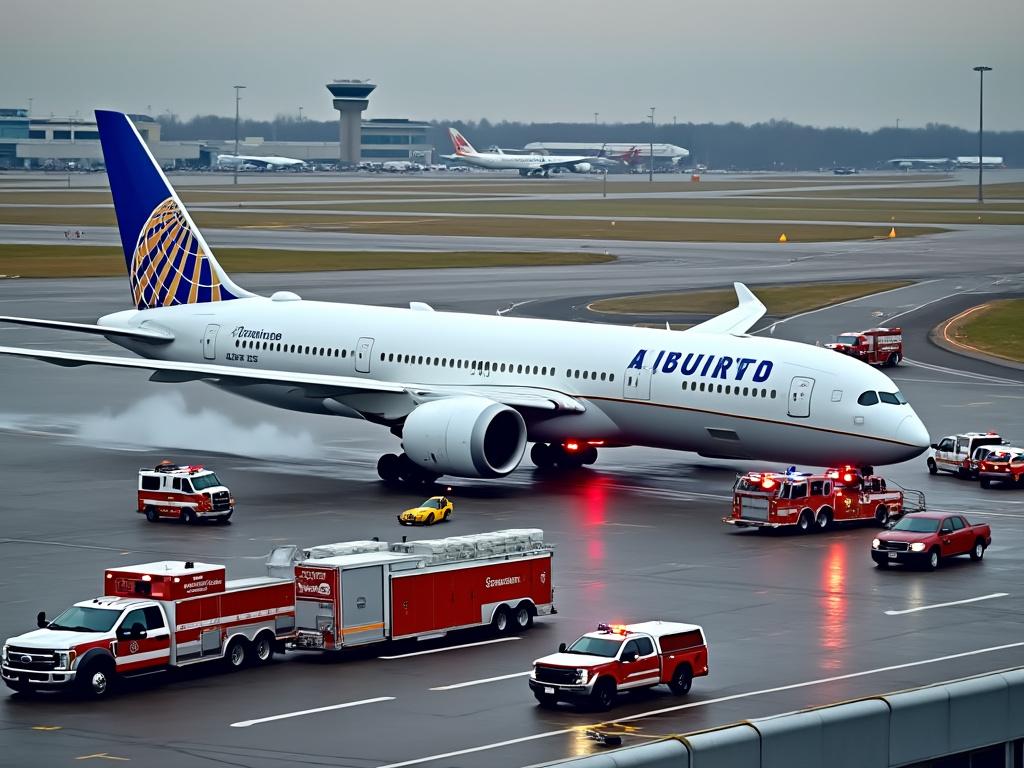
Discover the harrowing events of July 25, 2025, when United Airlines Flight 108, carrying 219 passengers to Munich, issued a distress call shortly after takeoff due to an engine failure. This article delves into the incident, highlighting the swift actions taken to ensure passenger safety.
The Initial Crisis
United Flight 108 was in the initial phase of its transatlantic journey when a sudden and unexpected engine failure plunged the aircraft into crisis. The flight crew, trained for such exigencies, quickly identified the crisis through the aircraft’s sophisticated monitoring systems, which signaled a drastic reduction in engine performance accompanied by vibrations and an abnormal sound. Instantly comprehending the gravity of the situation, the captain issued a mayday call, an international distress signal indicating a life-threatening emergency. This immediate declaration alerted air traffic control, which then prioritized the flight, clearing its path and urgently coordinating with nearby airports for an emergency landing. This prompt communication was critical in mobilizing all necessary ground support and ensuring that further complications were mitigated.
Handling the Emergency
Following the mayday call, the flight crew quickly moved to manage United Flight 108’s heavy load due to full fuel tanks. A crucial decision was whether to dump fuel or to circle the area, allowing the fuel to burn off naturally. Opting for safety and efficiency, the crew chose to initiate a fuel dumping procedure. This action was critical to reduce the landing weight of the aircraft, minimizing the risk of overrun and structural damage upon touchdown. Coordinating closely with air traffic control, the pilot found a safe zone over the ocean to release the fuel, adhering to strict environmental and safety regulations. This step was vital for a safer emergency landing, allowing the aircraft to reach an optimal landing weight and reduce stress on the airframe.
The Landing
Following carefully calculated fuel reduction, United 108 neared Washington Dulles International Airport under intense scrutiny. The pilots, highly trained for such exigencies, encountered a significant crosswind that threatened stability during their final approach. Through a display of expert navigation and teamwork, they adjusted the aircraft’s descent path to account for the environmental challenge. Utilizing the Instrument Landing System (ILS) to enhance precision, they managed a smooth touchdown. Remarkably, their adept handling of the aircraft ensured the safety of all passengers and minimized damage to the Boeing 777, which bore temporary signs of distress but no catastrophic failures. This precision landing underscored the crew’s professional prowess in managing a multifaceted aerial emergency.
Post-Emergency Procedures
Upon the successful emergency landing of United Airlines Flight 108 at Washington Dulles International Airport, airport emergency services were immediately mobilized. The aircraft was met by fire trucks and emergency medical teams as a precautionary measure. Passengers were swiftly disembarked using mobile staircases, as the integrity of the jet bridge could not be guaranteed under the circumstances.
Once safely off the aircraft, passengers were guided to a designated reception area where they underwent brief health checks by medical personnel, ensuring that no underlying stress or injuries were overlooked during the moderately turbulent landing. Recognizing the need to address both physical comfort and emotional distress, airline representatives were present to provide support and facilitate communication.
Following initial assessments, arrangements were made to rebook passengers on the next available flights to their intended destinations. For those facing extended delays, accommodations and meals were provided. The airline’s immediate focus was on minimizing disruption to travel plans while ensuring the well-being of all passengers, underscoring the importance of efficient passenger management in emergency scenarios.
Investigation and Conclusion
The subsequent investigation into United 108’s engine failure was spearheaded by both the National Transportation Safety Board (NTSB) and the Federal Aviation Administration (FAA), alongside contributions from United Airlines and the engine manufacturer. Forensic analysis pinpointed a critical turbine blade fracture due to metal fatigue as the catalyst. This finding spurred a rigorous industry-wide review of similar engine models, leading to enhanced inspection protocols to monitor for early signs of wear and tear. Recommendations included more frequent and detailed engine checks, specifically focusing on older turbine blades susceptible to stress-related failures. This incident likely will usher an era of more stringent engine maintenance standards and manufacturing practices, potentially redefining reliability benchmarks for the aviation sector.
Conclusions
United Airlines Flight 108’s incident underscores the effectiveness of established emergency protocols in aviation. The successful handling of this critical situation highlights not only the preparedness of flight and ground crews but also the resilience of safety measures in modern air travel.