
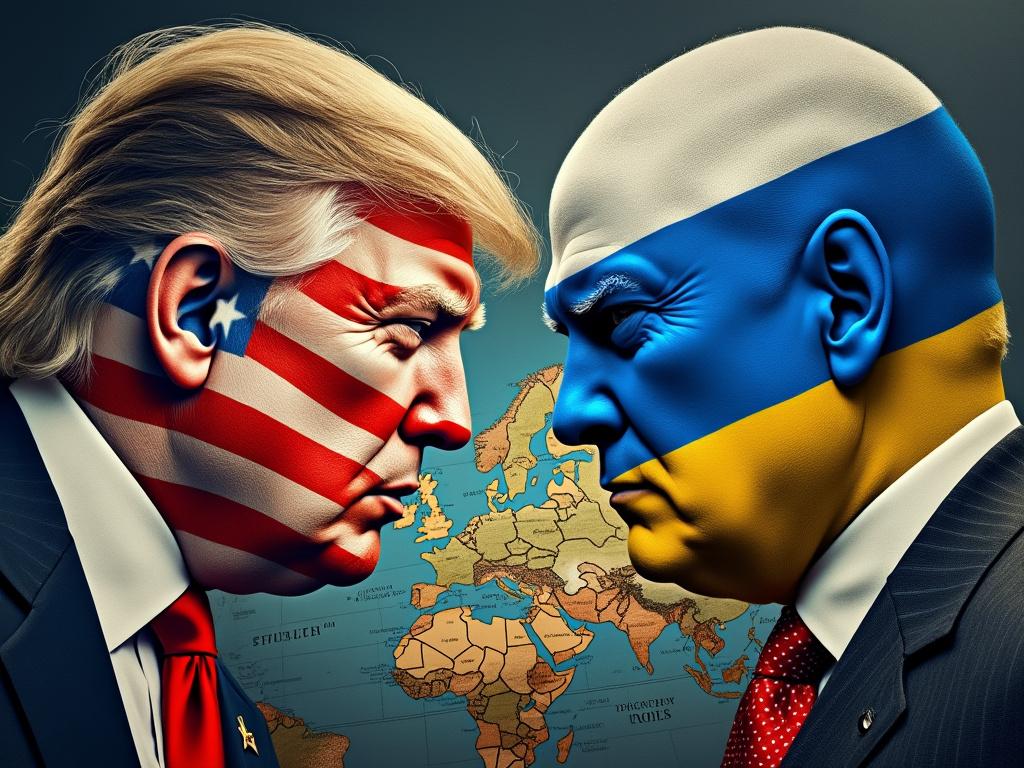
As August 2025 approaches, the deadline set by U.S. President Donald Trump for Russia to end its conflict in Ukraine looms large. This ultimatum has escalated global tensions, invoking fears of nuclear confrontation reminiscent of the Cold War era’s darkest days.
Trump’s Ultimatum and the Stirring of Global Powers
In August 2025, President Trump issued a stark ultimatum to Russia: cease all hostilities in Ukraine by the end of the week or face severe consequences. This bold declaration was not merely a diplomatic maneuver but a calculated standoff involving the strategic deployment of U.S. nuclear submarines near Russian territorial waters. This show of force was underscored by the subsequent mobilization of U.S. military assets in Eastern Europe. The geopolitical motivations behind Trump’s decision are deeply rooted in demonstrating U.S. resolve and capability, signaling to both allies and adversaries that the U.S. would not tolerate prolonged aggression against Ukraine, a strategic partner.
Reacting to Trump’s ultimatum, former Russian President Dmitry Medvedev issued inflammatory responses, vehemently denouncing the U.S. moves as provocative and dangerous, escalating the nuclear rhetoric to levels reminiscent of the Cold War crises. Medvedev’s sharp rebuke represented not just a personal condemnation but also a broader defensive posture by Russia, foreshadowing potential retaliatory measures and complicating diplomatic resolutions. The rhetoric employed by both nations had the immediate effect of heightening global anxieties about a possible nuclear escalation, laying a precarious groundwork for international diplomatic engagement.
Global Fallout and the Shockwaves Through NATO
As the unsettling cadence of nuclear saber-rattling echoed across the world, a palpable wave of anxiety swept through the capitals of European NATO allies. Urgent diplomatic consultations materialized as leaders wrestled with the looming specter of a nuclear escalation. These nations found themselves grappling not only with the inherent threat of a potential global conflict but also with the multifaceted strategic dilemmas posed by their geopolitical alignments and local public opinion.
Widespread public protests in cities from Berlin to Rome underscored a potent dissent against the escalation, influencing governmental discourse. Within the halls of power, some governments advocated for intensified diplomatic interventions, suggesting that mediation might derail a glide into catastrophe. The stark prospect of military entanglements and the possible activation of Article 5—NATO’s collective defense pledge—ushered in a frenzied reassessment of military postures across the continent.
The divergence in responses highlighted fissures within the alliance, as some members called for a more pronounced military readiness, while others clung to advocacy for peaceful resolutions. This discord sowed uncertainty about the unity and future actions of NATO, complicating the global strategic landscape at a time when cohesive resolve seemed paramount.
Russian Counter-Moves and Strategic Posturing
As the deadline imposed by President Trump loomed, Russia’s immediate responses to U.S. military actions were both rhetorical and tangible. Strategically, Russia revised its military doctrine to emphasize the defensive deployment of short- and intermediate-range nuclear missiles, sending a chilling signal of readiness for a protracted standoff. Publicly, Russian leaders escalated their rhetoric, asserting national sovereignty and decrying perceived Western aggression. This posture was aimed both at consolidating internal support and at deterring any further escalation by the U.S. or its NATO allies. Internally, the Kremlin faced substantial pressure from hardliners pushing for an even more aggressive stance against the U.S., influencing these doctrinal shifts. Externally, the deployment of nuclear capabilities in regions proximate to NATO territories highlighted Russia’s strategic intent to counteract any intervention by exerting military pressure. This maneuver underscored the perilous brinkmanship enveloping Eastern Europe, shifting the geopolitical balance towards heightened unpredictability as diplomatic efforts continued in the background.
Navigating the Diplomatic Tightrope
As the August 2025 deadline looms, diplomatic efforts intensify under the guidance of Trump’s special envoy, who shuttles between capitals attempting to thread the needle between firm U.S. resolutions and Russian pride. Negotiations teeter on the brink, as both sides explore potential diplomatic off-ramps to avert a direct confrontation. The talks, characterized by clandestine meetings and public posturing, face challenges from hardliners on both sides, making any resolution precarious. Meanwhile, military assets are positioned strategically by both nations, underscoring the high stakes and barely concealed threats. The implications of these discussions extend far beyond the immediate crisis, with global economic stability and regional security hanging in the balance. Failure, therefore, is not just a bilateral disaster but a potential global crisis, pushing diplomatic efforts to their absolute limits under the shadow of nuclear armament.
Strategic and Historical Context
In the shadow of Cold War specters, recent actions by President Trump evoke an ominous historical parallel, particularly mirroring the Cuban Missile Crisis’s brinkmanship. Then, like now, the aggressive posturing of nuclear capabilities served as a high-stakes deterrent. Crucially, modern dynamics are further inflamed by a fraying international arms control framework. The dissolution of pivotal accords such as the INF Treaty has left today’s geopolitical landscape markedly more volatile. Unlike previous eras where structured dialogues and treaties like SALT restrained such escalations, today’s leaders navigate an environment where traditional rules of engagement have been destabilized, increasing the risk of misinterpretations and miscalculations in nuclear rhetoric and readiness. The looming August 2025 deadline only intensifies these dangers, as it forces a countdown in an already precarious showdown.
Conclusions
As the deadline approaches, the world watches a high-stakes nuclear standoff between the U.S. and Russia over Ukraine. With strategic military deployments and harsh rhetoric heightening tensions, the need for successful diplomacy is urgent to avoid a catastrophic escalation. This crisis could potentially mark one of the most critical moments in recent global history.