
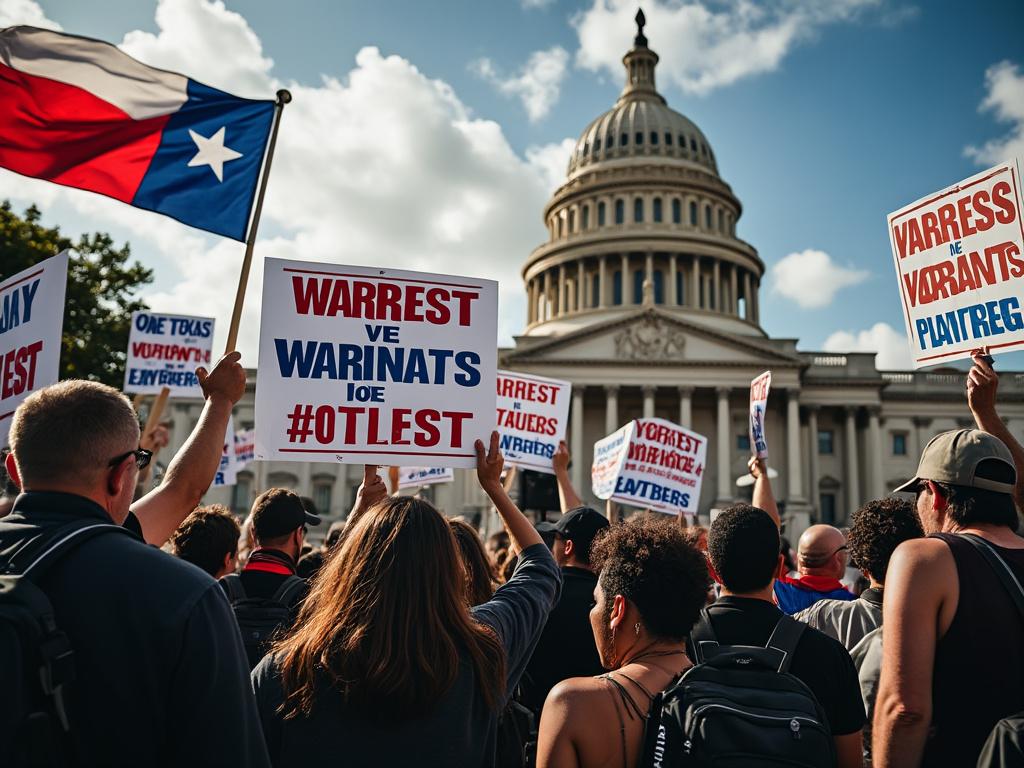
In August 2025, Texas Governor Greg Abbott’s order to arrest fleeing Democratic lawmakers marked a dramatic escalation in a long-standing political battle. This bold move places the spotlight on legislative proceedings, partisan conflicts, and the exercise of state power.
The Quorum Break and Governor Abbott’s Response
In a dramatic escalation of the redistricting conflict, Texas Democrats executed a quorum break, fleeing the state to stall a Republican-backed redistricting bill. Governor Greg Abbott, in an unprecedented move, instructed the Texas Department of Public Safety to issue arrest warrants to compel the lawmakers’ return. This action, rooted in a rarely exercised power, sparked immediate legal and political challenges. Heavy criticism and support poured in from across the political spectrum, marking a crucial point of contention. Texas House Speaker Dustin Burrows, supporting Abbott’s decision, argued that maintaining legislative order necessitated strong measures, whereas Democrats contended that their civil liberties were being trampled. This standoff not only heightened political tensions but also beckoned an intense legal scrutiny of the steps taken by Texas leadership.
Historical and Legal Context
Historical and Legal Context: The tensions in Texas echo long-standing debates over the rights and limits of legislative minority groups. The principle of quorum-breaking, referenced within the Texas Constitution, allows a minority to block a decision by denying the majority a quorum. This radical tool reflects a deep tradition in democratic systems as a check against majority tyranny. Notable in 2021, Democrats employed this tactic, highlighting its recurrent theme in Texas politics. The Texas Supreme Court has historically upheld that the state can compel a quorum. Its rulings clarify that legislators can be arrested within state boundaries to ensure governmental function, setting a substantial precedent that integrates legal constraints with democratic principles. However, enforcement beyond state lines remains legally contentious, a point underscored when broader jurisdictional limits come into scrutiny.
Political Strategies and Public Reactions
In the wake of Governor Abbott’s orders, Texas Democrats employed a series of strategic maneuvers to evade arrests, utilizing legal ambiguities and interstate support, aspects that were strategically planned and not spur of the moment decisions. Their tactics not only involved physically leaving the state to break quorum but also invoked constitutional debates on the limits of state power, thus resonating with national themes about minority rights and democratic processes. Republicans, intent on passing the redistricting bill, portrayed these actions as a dereliction of democratic duty, emphasizing the need for legislative presence to uphold the state’s governance.
This political chess game profoundly impacted public opinion, eliciting polarized responses. Supporters of the Democrats viewed the move as a bold stand against an unfair redistricting plan likely to marginalize minority voters. Conversely, Republican constituents criticized the Democrats for abandoning their legislative responsibilities and stalling government operations. The national media magnified these divisions, framing the standoff as a microcosm of wider national struggles over voting rights and electoral integrity.
As the events unfolded, the implications for future legislative sessions and electoral cycles became evident. The Democrats’ resistance set a precedent for similar actions under extreme legislative disagreements, potentially leading to more frequent uses of drastic measures like quorum breaks in future sessions. Simultaneously, the public’s heightened awareness and the intense media coverage could influence voter behavior in upcoming elections, possibly galvanizing turnout and affecting candidacies on both sides of the aisle.
Interstate Dynamics and External Support
Amid Governor Greg Abbott’s unprecedented order to arrest the fleeing Texas Democrats, Illinois Governor JB Pritzker emerged as a crucial ally, vocally defending their right to seek refuge and criticize the redistricting plans. This interstate sanctuary not only highlighted the defiance against traditional redistricting norms but also raised intricate legal questions about the enforceability of civil arrest warrants across state lines. The situation spurred discussions among legal experts on the bounds of state powers and interstate legal cooperation. Even as states like Illinois supported the Texas Democrats, others remained ambivalent, refraining from taking a public stance, which theoretically stemmed from their own political and legal considerations. Meanwhile, entities outside of the governmental sphere—civil rights organizations and individual activists—galvanized support and funneled resources towards the Democrats’ cause, emphasizing the broader implications for minority representation and the democratic process.
Future Implications and Lasting Effects
The long-term implications of the redistricting standoff in Texas could reverberate well beyond its borders, potentially reshaping legislative strategies nationwide. If Texas Democrats’ resistance proves even partially successful, it could inspire similar tactics in other states facing contentious legislative measures, fostering a new era of political activism within state governments. Moreover, this prolonged conflict might prompt legislative bodies to reconsider the rules around quorum and attendance, potentially leading to stricter enforcement or even reforms to prevent future political stalemates. Additionally, the vivid media coverage and the dramatic nature of the standoff could significantly influence voter behavior, possibly increasing voter engagement and turnout in local and state elections. This heightened awareness and participation could alter the political landscape, making it more reflective of diverse voter bases and possibly leading to more balanced policy outcomes. These scenarios, while speculative, underscore the potential for lasting change initiated by the current conflict in Texas politics.
Conclusions
The Texas legislative showdown opens a significant chapter in state governance and civil liberties, testing the strength of legal and democratic principles. While the outcome remains uncertain, the intense battle demonstrates the lengths to which political entities will go to uphold their agendas and protect minority rights.