
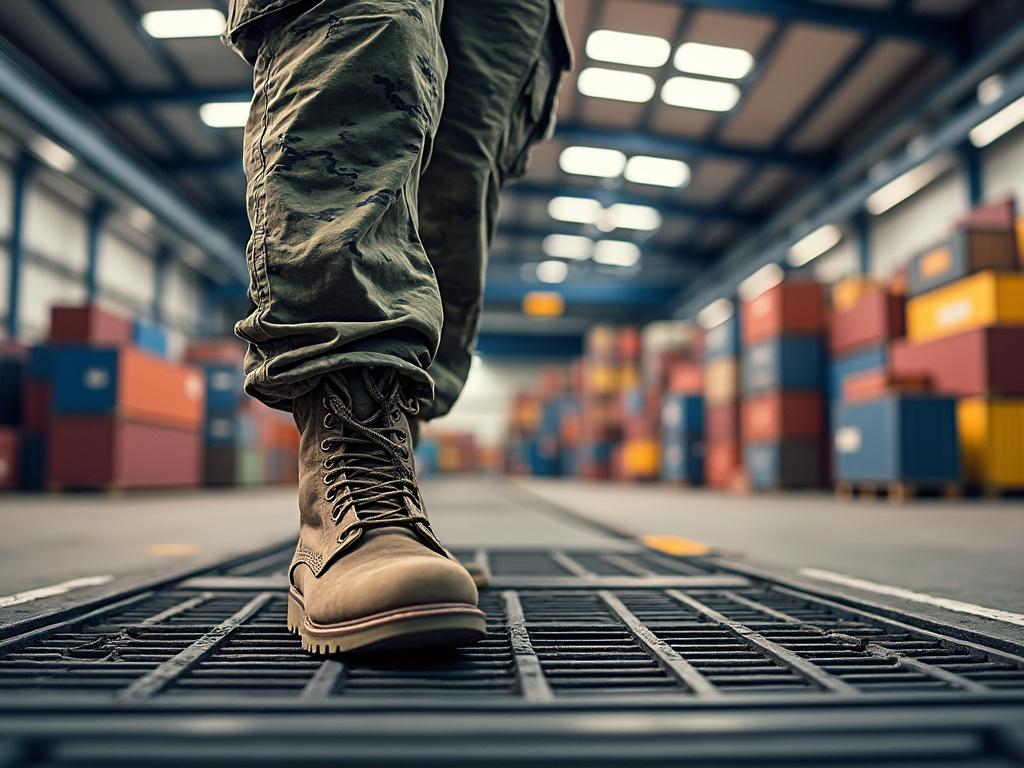
The Better Outfitting Our Troops (BOOTS) Act has sparked debate on its true motive—patriotic support for U.S. troops and industries or a strategic act of economic protectionism. This analysis dives deep into its implications for military preparedness, economic impact, and global trade dynamics.
The Mechanics and Framing of the BOOTS Act
The BOOTS Act, ostensibly introduced to secure and enhance national military preparedness by mandating U.S.-made combat boots, carries undertones of economic nationalism cloaked in the robes of patriotism. Proponents of the Act advance it as a necessary safeguard for American military personnel, emphasizing the vulnerabilities in relying on foreign-produced equipment. However, this legislative move goes beyond simple preparedness, subtly bolstering American manufacturing under the patriotic guise. Critics argue that by framing the Act with national security concerns, the government effectively shields it from free-market competition criticism, promoting a form of protectionism that is less about genuine patriotism and more about prioritizing domestic industries in global marketplaces. The debate juxtaposes economic interests with national loyalty, challenging the delineation between securing domestic production capabilities and engaging in economic isolationism.
The Economic Reality Protectionism in Disguise
Scrutinizing the economic underpinnings of the BOOTS Act reveals a pattern mirroring classic protectionism, where government intervention favors certain industries under the nationalistic banner. By restricting military boot production exclusively to U.S. manufacturers, the Act effectively eliminates foreign competition, setting a stage akin to a government-endorsed monopoly. Such frameworks typically lead to reduced external competitive pressures, allowing domestic companies to hike prices and possibly neglect innovation due to their secure market position. Drawing parallels with the Smoot-Hawley Tariff Act, which notably exacerbated the Great Depression through similar protectionist measures, the consequences of the BOOTS Act could ripple similarly across the competitive landscape. Such economic insulation risks not only inflated costs for the military and, ultimately, the taxpayer but also stifles the competitive impetus necessary for qualitative and innovative advancements in boot technology and manufacturing processes. This approach, while wrapped in the flag, offers a poignant reminder that protectionism, even when veiled in patriotism, can bear costly and unintended economic repercussions.
The Cost to Soldiers and Taxpayers
While the BOOTS Act may convey a sense of nationalistic duty by mandating U.S.-manufactured military boots, its practical implications raise concerns about whether it truly serves the best interests of soldiers and taxpayers. Limiting procurement to domestic manufacturers reduces the pool from which the military can source high-quality boots, potentially compromising the quality and variety available to troops. Military boots are highly specialized products, and with fewer competitors in the market, innovation could stagnate, adversely affecting the performance and comfort of the footwear available to soldiers. Moreover, the restriction to domestic sources often results in higher costs, which are ultimately borne by taxpayers. Financially, this can lead to inflated spending on military supplies without a corresponding increase in value or quality, questioning whether the act supports national welfare or merely shelters select industries at a greater cost. As such, imposing domestic production under the guise of patriotism may inadvertently weaken troop readiness and fiscal efficiency, complicating the very security and economic stability it aims to bolster.
Supply Chain Claims and Overstated Security Threats
Supporters of the BOOTS Act frame it as a necessary measure for national security, positing that reliance on foreign military boot suppliers could pose a risk. However, such claims often disregard the robustness introduced by a globally diversified supply chain. In practice, restricting procurement to U.S. manufacturers under the guise of security can ironically weaken it. This is because a singular domestic source lacks the flexibility and innovation spurred by global competition. Additionally, the Act might present logistical risks, including reduced response capability in resource-strapped situations. This scenario demonstrates that while the intent is to safeguard national interests, the outcome of such protectionism can be a stifled, less competitive market that ultimately does not align with the modern economic realities or contribute positively to national security.
International Trade Implications and the Race to the Bottom
The BOOTS Act, under the guise of enhancing national security, signifies a potentially protectionist shift reminiscent of historical trade policies that have frequently precipitated reciprocal trade barriers and economic strife. Historically, such protectionist measures have often led to tit-for-tat tariffs and disrupted global supply chains, an outcome that might echo with the enactment of the BOOTS Act. Crucially, this Act might provoke key U.S. trading partners, who could perceive this move as a unilateral disruption to the principles of free trade, leading to strained diplomatic relations and potential retaliatory measures. Sectors outside the military apparel industry might face unexpected repercussions as global markets adjust to these new trade barriers, potentially spiraling into broader economic instability. This surge in nationalist policies might not only undermine long-established trade agreements but could also lead to a ‘race to the bottom’ scenario, where countries increasingly adopt inward-looking policies at the cost of global economic interdependence and cooperation.
Conclusions
The BOOTS Act, while framed as a measure to support U.S. troops and industry, embodies elements of protectionism that might overshadow its patriotic intent. With potential adverse impacts on economic efficiency, global trade relations, and military readiness, it exemplifies the complexities and risks of nationalistic economic policies.