
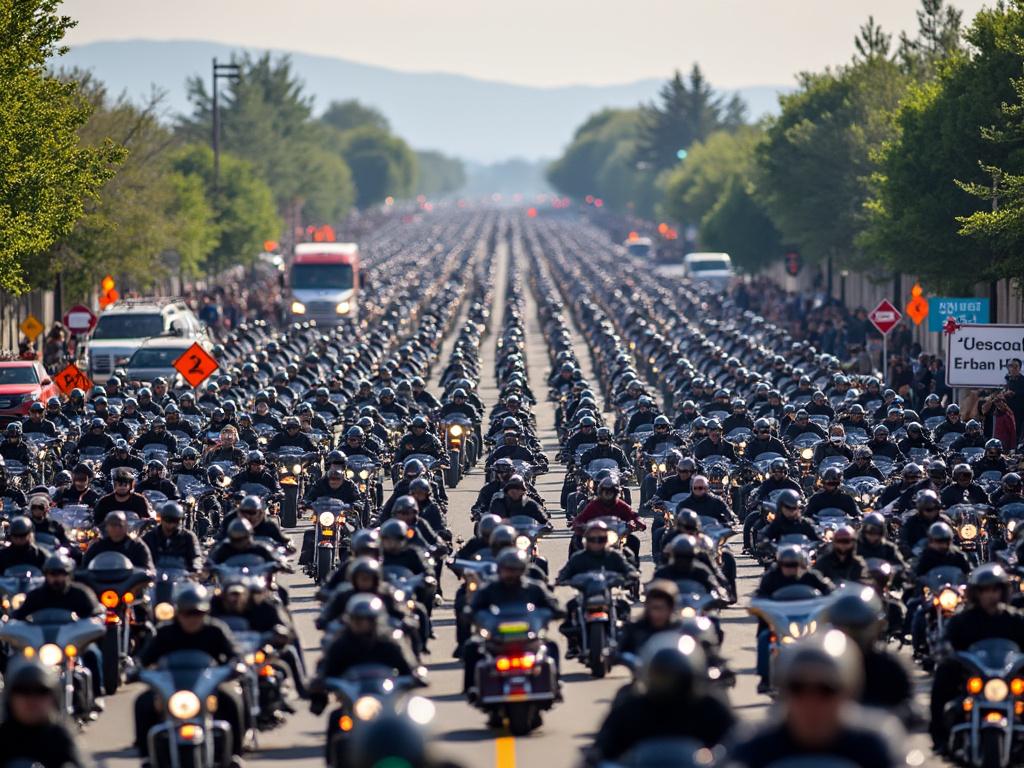
The 2025 Sturgis Motorcycle Rally, a hallmark event drawing bikers worldwide, revealed a stark escalation in accidents, with 18 crashes recorded in a single day. This article delves into the critical issues and implications of such a surge during the monumental 85th gathering in South Dakota.
Annual Arrival and Impact Analysis
Annual Arrival and Impact Analysis: The Sturgis Motorcycle Rally, with its roots stretching back to 1938, has evolved from a small gathering of enthusiasts to a colossal event attracting hundreds of thousands. What began as the Black Hills Classic, featuring a mere handful of racers, now sees riders from around the globe converging in Sturgis, South Dakota. This migration annually transforms the quiet town into a roaring hub of motorcycle culture. The surge in attendees, notably on two wheels, presents unique challenges, particularly concerning public safety and the strain on local infrastructure. Roads usually serving small local traffic must suddenly support vast numbers of motorcycles and associated vehicles, significantly increasing the risk of accidents and traffic congestion, and placing immense pressure on local roadways and safety services.
Detailed Crash Reports
On an alarming single day of the 2025 Sturgis Motorcycle Rally, 18 crashes were documented, spotlighting diverse accident scenarios. A primary incident involved a chain reaction crash due to a sudden stop at an intersection, where only two of six riders involved wore helmets. Factors such as speed, alcohol influence, and inexperienced riders intertwined disastrously. The absence of helmets significantly upped head trauma cases, echoing long-standing debates over mandatory helmet laws.
In terms of injuries, the range was widely variative—from minor scrapes to several fatalities. Emergency responders noted the strain on resources, particularly from multiple severe injuries requiring immediate airlifts to regional trauma centers. These events provided a stark snapshot into the broader challenges facing motorcycle safety, even prompting discussions on emergency response planning in such mass gathering scenarios.
Risks Beyond South Dakota
The Sturgis Motorcycle Rally casts a wide net of influence beyond South Dakota, significantly impacting neighboring states like Wyoming, where traffic volumes swell with attendees navigating regional routes. This elevated movement invariably results in increased motorcycle accidents, with a notable frequency in older rider demographics. Wyoming, serving as a conduit for many rally-goers, witnesses distinct accident patterns that mirror the event’s demographics. The majority of these accidents involve riders above age 50, who often face higher risks due to slower reaction times and greater susceptibility to severe injuries. This trend underscores the broader regional challenges posed by the event, necessitating heightened awareness and targeted safety protocols for older motorcyclists navigating these popular yet perilous routes.
Challenges for Emergency Services
During the 85th Sturgis Motorcycle Rally, local emergency services faced monumental challenges controlling the surge of motorcycles and spectators. Law enforcement agencies deployed multifaceted strategies, including increased roadside checks and a hefty presence of officers on foot and in patrol cars, especially on key routes known for high accident rates. Their primary focus was on curbing reckless driving behaviors—such as speeding and aggressive lane changes—that are notorious during this event.
In high-stress scenarios, such as high-speed pursuits or managing intoxicated riders, these efforts frequently became complicated. Police were forced to balance stringent law enforcement with ensuring the safety of thousands of rally participants and spectators. Their task was further burdened by the necessity to respond rapidly to accidents, sometimes involving critical injuries requiring immediate medical attention, making coordination and efficiency paramount in their operational strategy. These actions underscore the continuous tension between celebration and safety at such large-scale events.
Safety Advisories and Future Projections
In response to the alarming number of motorcycle crashes, safety advisories by local law enforcement emphasized stringent speed management, compulsory helmet use, and expert guidance on navigating curves. Special attention was directed toward temporary speed limits and high-visibility patrolling to curb speed violations. Moreover, community outreach programs amplified public awareness about the efficacy of helmets in preventing fatal injuries. To further mitigate risks, authorities conducted educational campaigns illustrating safe techniques for handling curves—a common crash site scenario.
Looking ahead, enhanced strategies suggest integrating advanced traffic monitoring technologies and real-time analytics to assess rally dynamics and adjust safety measures accordingly. Additionally, proposing mandatory safety workshops for all attendees could significantly bolster individual preparedness. These future-focused interventions aim to strike a balance between rally enjoyment and participant safety, ensuring a sustained decline in crash incidences and bolstering overall public security at forthcoming Sturgis Motorcycle Rallies.
Conclusions
The 2025 Sturgis Motorcycle Rally has underscored the critical challenges related to public safety during large-scale bike events. The high number of incidents calls for significant attention to driving responsibly, the imperative of helmet use, and enhanced safety preparedness to reduce risks for all participants.