
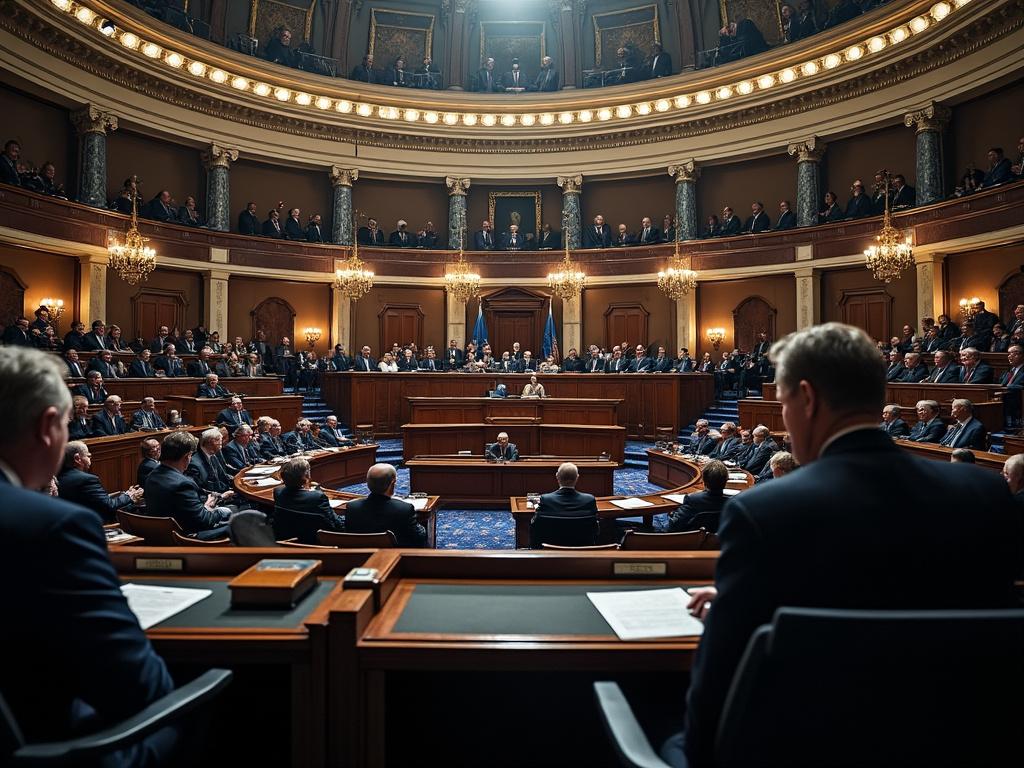
Amid growing tensions in the U.S. Senate, Republicans threaten to invoke the “nuclear option” in response to stalled negotiations on judicial and executive nominations. This maneuver could reshape Senate operations and influence the dynamics of American governance.
The Nominations Stalemate and Political Pressures
The ongoing nominations stalemate in the Senate reveals deep-seated partisan divisions, particularly highlighted under President Trump’s administration where a significant backlog of nominees faced obstruction. Senate Majority Leader Chuck Schumer’s insistence on substantive concessions from the Republicans, designed to address aspects like jurisdictional balance and policy assurances, illustrates the tactical plays at work. This battleground reflects not only ideological conflicts but also pressures from internal party factions demanding adherence to their principles and external pressures from a polarized public eager for governmental efficacy. Both parties resort to strategic maneuverings, including threats of deploying the ‘nuclear option’ for overcoming filibusters on nominations, intensifying the high-stakes environment. This scenario underscores the escalating tactical gamesmanship that typifies current Senate operations.
Understanding the Nuclear Option
The “nuclear option” refers to a significant parliamentary procedure that allows the U.S. Senate to override a standing rule by a simple majority vote, effectively altering the required threshold for approving certain matters, including judicial and executive nominations. Its roots lie deep within Senate history, tracing back to discussions about circumventing procedural stalemates, but it was not until 2013 and then again in 2017 that it was effectively utilized. In 2013, led by then-Majority Leader Harry Reid, Democrats invoked the nuclear option to eliminate the filibuster for executive branch nominations and federal judicial appointments, except for the Supreme Court, reducing the need for a supermajority of 60 votes to a simple majority. This change occurred in response to extensive delays and blockages in the nomination process. In 2017, the scope of the nuclear option was expanded under Republican leadership to include Supreme Court nominations, effectively dismantling the 60-vote requirement for all judicial nominees, thereby consolidating the move towards a more majoritarian operation in the Senate. These changes marked profound shifts, decreasing the power of the minority to stall presidential appointments—intensifying partisan divides and potentially altering the deliberative nature traditionally celebrated in the Senate. This restructuring of confirmation rules is a testament to the growing polarization within the chamber, foregrounding fierce debates over the balance of power and the undermining of minority rights essential for bipartisan negotiation.
The Current Showdown and Prospects for Rule Change
As the Senate stands on the precipice of the August recess, the GOP’s readiness to deploy the ‘nuclear option’ underscores a critical impasse over nominations. Key GOP leaders argue that this drastic measure is a necessary response to what they perceive as unprecedented obstruction by Democrats of judicial and executive nominations. Senator Alex Padilla, representing the opposing view, emphasizes the risks to Senate traditions, warning that employing such an option could irreversibly damage the fabric of bipartisan cooperation in the legislative process. The arguments hinge on a delicate balance between expediting governmental functions and preserving democratic deliberation. Axios articles highlight this tension, suggesting that the move could set a precedent, further deepening the partisan divide and potentially altering future legislative procedures permanently. By citing specific instances from these sources, it becomes evident that the ramifications of invoking the nuclear option stretch beyond immediate confirmations, signaling a possible reconfiguration of Senate operations and inter-party dynamics.
Broader Implications and Political Calculus
Invoking the nuclear option could profoundly reshape the Senate’s political landscape and its institutional dynamics. This maneuver, by reducing the threshold for overcoming filibusters on nominations, concentrates more power in the majority’s hands, potentially sidelining the minority party and diminishing their legislative influence. Historically informed analyses, such as those from Brookings, suggest such actions disrupt Senate traditions of deliberation, where minority rights have previously acted as a check on majority excesses. The potential for escalating retaliatory measures when control switches could lead to a cyclical degradation of Senate norms. The strategic motivations behind this are grounded in immediate partisan advantages but may incur long-term costs to the Senate’s role as a deliberative body, fostering an environment where short-term gains are prioritized over bipartisan stewardship and democratic principles.
Outlook: A Historic Test for the Senate
Should the Senate GOP proceed with the nuclear option, the future of Senate norms and bipartisan cooperation risks entering an era of significant transformation. Utilizing this option could set a precedent, potentially destabilizing the institution’s traditional role as a body of comprehensive deliberation. Stability would likely dwindle as minority party resistance intensifies, yielding a Senate where rule changes become a routine tactical maneuver rather than a carefully considered last resort. Public and political narratives will play pivotal roles, either amplifying partisan divides or mobilizing calls for systematic reform. The public’s perception of the Senate’s legitimacy could shift, depending upon how narratives around such changes are framed and received, impacting voter engagement and trust in legislative processes. This scenario could lead to more polarized legislative sessions, where short-term gains are pursued at the cost of long-term institutional health and public trust.
Conclusions
The use of the nuclear option by Senate Republicans could precipitate a fundamental shift in Senate dynamics and U.S. political landscape. This potential move highlights the stark divisions and the intense political brinkmanship that could redefine the balance between majority power and minority rights in American governance.